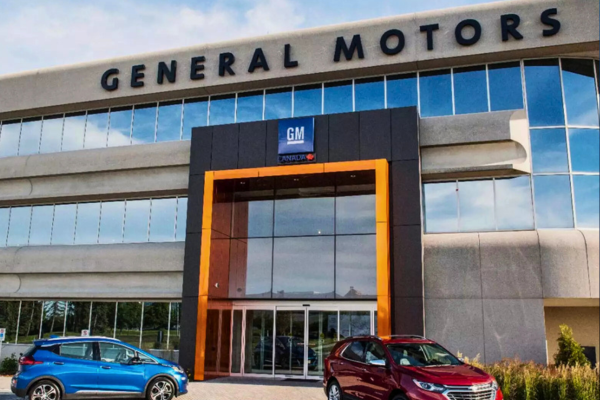
General Motors (GM) wants electric vehicle (EV) owners to see their cars differently. Not only as transport. Not only as a cleaner way to drive. But as a large battery sitting quietly in the driveway, ready to power a home when the lights go out.
The company is expanding its bidirectional charging push across its electric vehicle line-up. The idea is simple: a compatible GM EV could send electricity back into a properly equipped home during a blackout.
In future, the same technology could also help support the wider electricity grid. That would turn thousands of parked EVs into a huge network of mobile energy storage units.
For drivers, the benefit could be immediate. A car battery could keep a fridge running, power lights, support Wi-Fi, and help charge phones during an outage.
For the energy sector, the benefit could be even bigger. EVs could store electricity when demand is low and release it when the grid is under pressure.
GM Energy’s system is built around its PowerShift Charger and V2H Enablement Kit. The kit includes a home hub, inverter and dark start battery.
GM currently lists the V2H Enablement Kit at $6,299, reduced from $6,999. Its full V2H Bundle, which includes the PowerShift Charger and V2H Enablement Kit, is listed at $8,098.
However, that price does not tell the full story.
Professional installation is required. Permits, electrical work, taxes, fees, and possible home panel upgrades can push the final cost much higher.
That is where some EV owners are beginning to question the value.
For a household that only wants basic emergency backup, a standby generator may appear cheaper. Some portable battery systems can also cover essential loads without a complex installation.
But GM’s argument is that an EV battery is much larger than most home batteries. In the right setup, it could support heavier household loads and give families more control during outages.
There is also a cleaner-air benefit.
A petrol or diesel generator burns fuel outside the home. It can create noise, fumes and health risks if used wrongly. An EV battery can provide quiet backup power without tailpipe emissions at the point of use.
The technology could also help owners reduce energy bills in areas with time-of-use tariffs.
A household could charge the vehicle when electricity is cheaper. Later, it could use some of that stored energy when grid electricity becomes more expensive.
That is the dream behind vehicle-to-home and vehicle-to-grid technology.
Vehicle-to-home, known as V2H, sends power from the car to the house. Vehicle-to-grid, known as V2G, allows the car to send power back to the electricity network.
GM says it already has more than 250,000 bidirectional-capable EVs on American roads. It also says future planned EVs will carry the technology as a standard part of its wider electrification strategy.
That matters because EVs spend most of their lives parked.
For many owners, the battery is only used for driving. Bidirectional charging changes that. It gives the vehicle a second role as an energy asset.
The timing is important.
Electricity grids in many countries are facing pressure from extreme weather, ageing infrastructure, rising demand and renewable energy growth. Solar and wind can produce large amounts of electricity, but supply can change through the day.
EV batteries could help balance that system.
They could absorb power when supply is high. They could return power when demand rises. That would reduce strain on the grid and possibly lower costs for consumers.
Europe is already moving quickly in this direction.
In Germany, new rules from 2026 are expected to make V2G more financially attractive by removing double grid fees. That means EV owners should not be penalised twice when storing and returning power.
Nissan has also said it plans to launch more affordable vehicle-to-grid technology in the UK first, before moving into other European markets.
This shows that the race is no longer only about range, charging speed or battery size. It is now also about how useful an EV can be when it is parked.
For GM, this could help the company stand out in a crowded EV market.
Tesla still dominates much of the EV conversation. Chinese brands such as BYD are expanding globally. Legacy carmakers are under pressure to prove that their EVs offer more than electric driving.
GM’s energy strategy gives it a stronger story.
It connects the vehicle, the home and the grid. It also gives customers another reason to consider an EV beyond fuel savings and lower emissions.
But the challenge remains cost.
Many households may like the idea of powering a home from a car. Fewer may be ready to spend thousands of dollars on equipment and installation.
The value will depend on local electricity prices, outage frequency, available incentives, and whether utility companies pay owners for grid support.
For buyers, the key question is no longer just: “How far can this EV drive?”
It is also: “What else can this EV do for my home, my bills and my energy security?”
Read also: GM’s new battery bet could make electric vehicles thousands cheaper











![Private jet [Photo Credit Peakpx]](https://autojournal.africa/wp-content/uploads/2023/08/Private-jet-Photo-Credit-Peakpx-120x86.jpg)