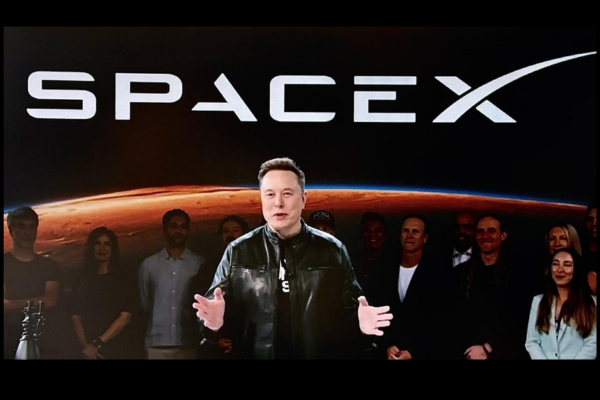
SpaceX’s stock market debut is bigger than a company going public. It is a signal that the future of mobility is no longer limited to roads, cars, ships and aircraft. It is moving into orbit.
According to Reuters, SpaceX is set to begin trading on Nasdaq after pricing its IPO at $135 per share, with plans to raise about $75 billion. That would value the company at around $1.75 trillion, placing it among the most valuable listed companies in the United States.
That figure is not just impressive. It is historic.
SpaceX was founded in 2002 and has grown into the world’s largest space business, helped by its reusable rocket technology and the rapid expansion of Starlink, its satellite internet network. Reuters reports that the company generated $18.67 billion in revenue in 2025, up 33%, although it still recorded a $4.94 billion net loss.
Investors are not only buying into rockets. They are buying into satellite internet, defence technology, artificial intelligence infrastructure, global connectivity and the next generation of transport systems. SpaceX is becoming more than a launch company. It is becoming a platform for the space economy.
For the wider mobility industry, the message is clear: the future will be shaped by companies that control technology, infrastructure and data.
The same lesson applies to the automotive industry. Tesla changed how the world thinks about electric vehicles. SpaceX is now changing how investors think about space, connectivity and long-term infrastructure. In both cases, the real value is not only in the machine. It is in the ecosystem around it.
But the excitement also comes with questions. Reuters reports that analysts and investors have raised concerns about SpaceX’s high valuation, its losses and the level of control retained by Elon Musk through its share structure.
That makes this IPO both a milestone and a test.
Can public investors value a company whose biggest promise may still be years ahead?
Can SpaceX turn its technology leadership into sustainable profit?
And can the market separate vision from valuation?
One thing is certain: SpaceX’s debut shows that the next industrial race will not only be on Earth. It will be in space, data, connectivity and advanced mobility.
At Autojournal Africa, we believe Africa must pay attention to this moment. The future of mobility will not be built by vehicle manufacturers alone. It will be built by companies that connect transport, energy, software, satellites and infrastructure.
The question for Africa is simple: will we only consume the future, or will we help build it?
Read also: SpaceX IPO analysis: How the $75bn offering made Elon Musk world’s first trillionaire