The growing cost of mobility in Nigeria, driven by rising vehicle prices, fuel costs and other operating expenses, is set to come under intense scrutiny as stakeholders in the automotive, financial and transport sectors converge in Lagos for the 2026 Lagos Chamber of Commerce and Industry (LCCI) Auto Sectoral and Allied Group Symposium.
The one-day symposium, scheduled for Thursday, September 17, 2026, will focus on the theme, “From Subsidy to Credit: Can Vehicle Financing Replace Fuel Subsidy as Nigeria’s Mobility Equalizer?”
The event is expected to provide a major platform for stakeholders to examine how innovative and affordable vehicle financing can provide a more sustainable solution to Nigeria’s mobility challenges at a time when the cost of transportation continues to place pressure on households, businesses and commercial transport operators.
The symposium is expected to bring together automobile manufacturers and dealers, commercial banks, development finance institutions, leasing and insurance companies, transport operators, government agencies, policymakers and other players across the automotive value chain. At the heart of the discussion is the argument that Nigeria’s mobility challenge cannot be addressed by focusing exclusively on the price of fuel.
With vehicle acquisition costs remaining a major barrier to ownership, stakeholders are expected to explore how accessible credit, longer repayment periods, leasing arrangements and tailored automotive-finance products can enable more Nigerians and businesses to acquire vehicles without bearing the entire cost upfront. For transport operators and small businesses, access to vehicle finance could also support fleet renewal, improve operational efficiency and create opportunities for expansion.
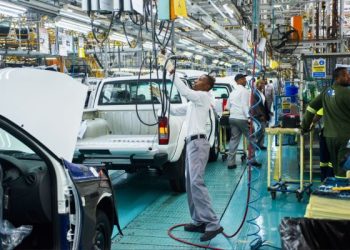
For the automotive industry, increased access to credit could stimulate demand for new vehicles, encourage local assembly and strengthen the wider automotive value chain.
However, stakeholders recognise that the transition from subsidy to credit will require a financing environment capable of responding to the realities of the Nigerian market.
High interest rates, short loan tenures, foreign-exchange pressures, high vehicle prices and credit-risk concerns have traditionally constrained the development of automotive finance in the country. The symposium is therefore expected to examine practical mechanisms for overcoming these challenges.
Eguaikhide: Mobility must become more affordable
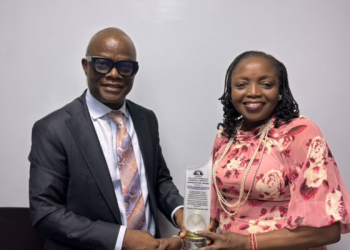
Chairman of the LCCI Auto Sectoral and Allied Group and Deputy Managing Director of R.T. Briscoe Nigeria Plc, Dr Femi Eguaikhide, said the symposium comes at a critical moment when Nigeria needs to rethink the way mobility is supported.
According to him, the country must begin to look beyond interventions that merely reduce the immediate cost of fuel and develop financing structures that make vehicle ownership and transportation more sustainable.
“The question before us is no longer simply how to make fuel cheaper, but how to make mobility more affordable and sustainable for Nigerians.
Vehicle financing has the potential to become a powerful mobility equalizer if we can develop the right credit structures, realistic repayment terms and strong collaboration between government, financial institutions and automotive industry stakeholders,” Eguaikhide said.
He stressed that the objective should be to develop financing solutions that are accessible to individuals, transport operators, entrepreneurs and businesses while ensuring that the system remains commercially sustainable for lenders.
The symposium, he noted, provides an opportunity for stakeholders to move beyond identifying the challenges and focus on practical solutions capable of transforming vehicle finance into a major component of Nigeria’s mobility strategy.
Beyond fuel subsidy
The debate over vehicle financing comes against the backdrop of the far-reaching changes in Nigeria’s transportation economics following the removal of fuel subsidy.
While fuel remains a major component of vehicle operating costs, stakeholders increasingly argue that the affordability of mobility must also take into consideration the cost of acquiring, maintaining and financing vehicles.
A credit-driven mobility model could therefore complement broader government efforts to improve transportation by enabling Nigerians to acquire productive assets rather than relying principally on measures aimed at reducing running costs.
For commercial transport operators, affordable financing could facilitate the replacement of ageing vehicles with newer, safer and more efficient units. For businesses, access to fleet finance could improve logistics and distribution capacity, while individuals could benefit from structured financing and leasing arrangements.
The initiative could equally create a stronger market for locally assembled vehicles and automotive components, supporting investment, employment and industrial development.
Stakeholders seek practical solutions
The LCCI symposium is expected to interrogate the role of banks and other financial institutions in creating automotive lending products suited to the income patterns and business realities of Nigerians.
Discussions are also expected to cover vehicle leasing, fleet financing, risk-sharing mechanisms, interest-rate structures, repayment periods, insurance and possible policy interventions capable of reducing the cost of automotive credit.
The organisers believe that mobility should be treated not merely as an automotive issue but as a critical component of economic development.
The symposium therefore seeks to place government, financial institutions and automotive industry stakeholders around the same table to develop a framework that can make vehicle acquisition and transportation more accessible.
The expected outcome is a set of practical recommendations that could help Nigeria move from short-term mobility interventions towards a more sustainable system based on affordable credit, asset ownership, fleet renewal and stronger automotive-sector development.
As stakeholders gather on September 17, 2026 at the Henry Fajemirokun Hall, Commerce House, No 1 Idowu Taylor, Street, Victoria Island, Lagos, the central question will be whether Nigeria can successfully transform vehicle finance from a relatively limited financial product into a mainstream economic instrument capable of making mobility accessible to a broader segment of the population.
The debate, ultimately, is about more than cars. It is about how Nigerians move to work, transport goods, conduct business and participate in economic activity and whether access to affordable credit can become the next major pathway to achieving sustainable mobility.