![BYD Seal [Source Reuters]](https://autojournal.africa/wp-content/uploads/2025/11/BYD-Seal-Source-Reuters.png)
China has issued new guidelines for automakers expanding overseas, putting greater focus on pricing, anti-monopoly compliance, anti-corruption controls and international investment risks as Chinese carmakers rapidly build their presence in global markets.
The rules come as manufacturers led by BYD expand beyond China, where intense competition has pushed companies to seek growth in overseas markets. The guidelines call on automakers to follow laws governing outbound investment and overseas business activities while strengthening social responsibility and risk management.
For consumers and competitors, the rules could signal a shift in how Chinese automakers compete abroad. Regulators said companies should base vehicle prices on costs and local market conditions and avoid using prices to gain unfair competitive advantages.
China Auto Industry Faces Global Competition
The guidelines also warn against frequent or steep price changes that could hurt consumers or damage the image of Chinese auto brands.
Automakers are further required to provide truthful marketing information and avoid misleading advertising. Exported vehicles should meet the needs of local markets, while companies operating abroad must comply with local labour laws.
The guidelines also call for stronger antitrust compliance and measures to prevent disruptive competition.
A Commerce Ministry official said the measures are intended to promote the “rational and orderly” cross-border deployment of industrial and supply chains and support the long-term international development of China’s auto industry.
The scale of China’s overseas auto expansion helps explain the regulatory focus. China exported 8.32 million vehicles in 2025 to more than 200 countries and regions, while Chinese companies invested in auto manufacturing projects in more than 80 markets, according to official data.
Electric Vehicle Market Drives Overseas Expansion
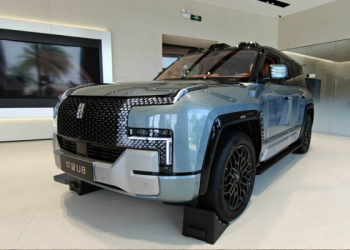
BYD has become a major force behind the international expansion of Chinese automakers. Reuters reported separately on Tuesday that BYD’s global sales rose 17.8% year-on-year to 440,293 vehicles in August 2026, while overseas shipments jumped 134.5% to 189,466 vehicles.
The company’s international growth has become increasingly important as competition in China’s domestic EV market weighs on profitability. In the first half of 2026, BYD generated more revenue overseas than domestically for the first time, Reuters reported.
The new guidelines also place greater emphasis on risk management. Automakers are expected to assess political, economic and safety conditions in host countries as they expand their operations.
For companies, that means overseas growth will involve more than exporting vehicles. Supply-chain planning, local manufacturing, labour compliance, pricing strategy and regulatory risk will increasingly shape how Chinese automakers compete internationally.
China’s new rules therefore come at a key point for its automotive industry. With millions of vehicles already entering international markets and Chinese manufacturers investing in production facilities abroad, Beijing is seeking what it describes as more orderly global expansion.
Read also: China’s electric taxi boom reduces oil dependence as EV adoption accelerate