For many drivers, the biggest fear about buying an electric car is not the car itself. It is the wait at the charger.
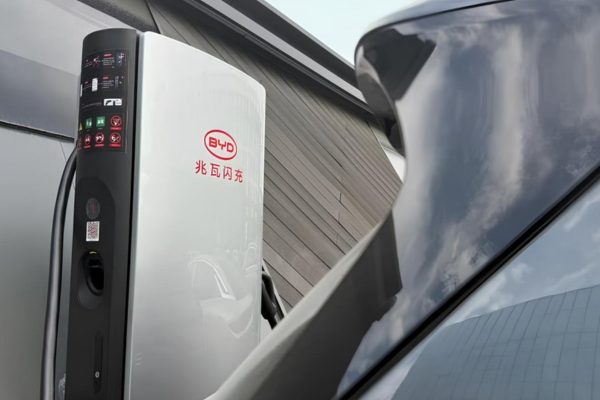
BYD, the Chinese electric vehicle giant, believes it may have found an answer. Its new Flash Charging technology promises to take EV charging much closer to the speed of filling a petrol or diesel car.
A sponsored TikTok video filmed at a BYD pre-launch event has added fresh attention to the claim. In the clip, creator Speedy Gonzara said a BYD vehicle charged from 10% to 97% in about nine minutes.
If widely delivered in real-world use, that would be a major moment for electric mobility. It could make long-distance EV driving feel less stressful and more familiar for everyday motorists.
BYD’s official message is simple: “ready in five, full in nine, cold add three.” In plain terms, the company says its system can prepare the battery in five minutes, reach a full charge in nine minutes, and only need about three extra minutes in very cold weather.
The technology is linked to BYD’s second-generation Blade Battery and its Super e-Platform. The platform uses a 1000V high-voltage system and can deliver up to 1 megawatt, or 1000kW, of charging power.
BYD says this can add up to 400km of driving range in five minutes. That is the kind of figure that could change how many people view electric cars.
Charging anxiety remains one of the strongest barriers to EV adoption. Even though many owners charge at home, public charging still matters for long journeys, taxi drivers, fleets and people without driveways.
This is where BYD’s timing becomes important. Electric car sales are growing, but infrastructure must keep pace with demand.
In the European Union, battery-electric cars took 19.4% of the new car market in the first quarter of 2026, up from 15.2% a year earlier. That shows strong progress, but it also increases pressure on charging networks.
BYD is not only selling cars. It is now trying to build the charging ecosystem around them.
In the UK, the company says 300 Flash Chargers are planned by the end of 2026. They are expected to be placed at DENZA stores and other locations.
The system also uses on-site battery storage. This means the charger can draw energy gradually from the grid and release it quickly when a vehicle needs a rapid top-up.
That matters because ultra-fast charging is not only about the car. It is also about whether the local power network can support such high energy demand.
For drivers, the appeal is simple. A stop that once felt like a delay could become a short break.
Instead of waiting for a long session, a driver may have enough time to buy a coffee, reply to a message, stretch their legs or check directions. For families, commercial drivers and commuters, those saved minutes could make a big difference.
However, there are still questions. The fastest charging speeds will depend on the vehicle, the battery, the charger, temperature and how busy the site is.
Not every BYD model will immediately support the highest speeds. The first real test will be how the technology performs when it moves from controlled demonstrations to everyday public charging.
Cost will also matter. Ultra-fast chargers are expensive to install, and operators must make them reliable, available and easy to use.
Still, BYD’s move shows where the global EV race is heading. Carmakers are no longer competing only on range, price and design.
They are now competing on time.
For years, petrol cars had one clear advantage: refuelling speed. BYD wants to remove that advantage.
If the company can deliver this technology at scale, it could shift public confidence in electric cars. It could also put pressure on Tesla, European carmakers and charging companies to respond quickly.
For EV buyers, the message is encouraging. The future of charging may not be about waiting longer.
It may be about waiting less.
Read also: BYD eyes Formula 1 sponsorship route as $450m entry barrier blocks team debut