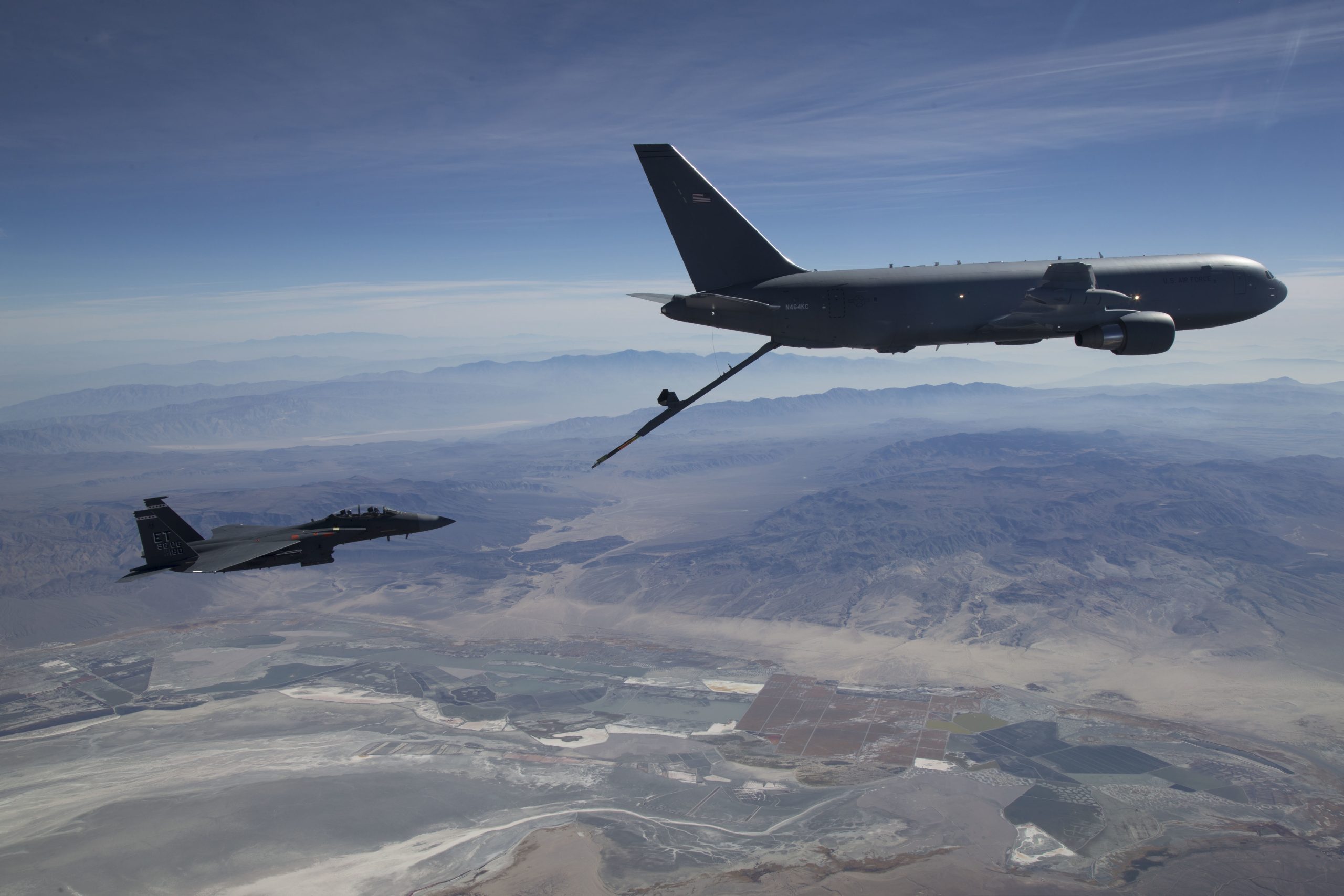
The KC-46A Pegasus program, developed for the US Air Force, has become one of the most closely watched defense procurement cases in modern aviation history after costing roughly $10 billion while still struggling with its core mission: aerial refueling.
At the center of the issue is Boeing, which has absorbed more than $7 billion in losses under a fixed-price defense contract structure designed to protect taxpayers from cost overruns.
KC-46A Pegasus Aerial Refueling System Defects Persist
The tanker was designed to replace aging fleets like the KC-135 Stratotanker and KC-10 Extender, extending global U.S. airpower through in-flight refueling.
However, its Remote Vision System (RVS) has repeatedly failed under real-world conditions. The digital system, which replaces direct visual control for boom operators, suffers from glare, distortion, and depth perception issues.
Air Force personnel have reported eye strain and reduced operational confidence, while officials classified the flaw as a Category 1 safety risk, meaning it could lead to serious injury or equipment loss.
One Air Force evaluation noted that in some conditions, operators must rely on estimation rather than consistent visual feedback during refueling operations.
Boeing Defense Contract Losses and Delays Continue
To address the issue, Boeing developed RVS 2.0, a redesigned system featuring upgraded sensors and 4K 3D displays. However, delivery timelines have repeatedly slipped—from 2023 to 2028.
Despite these setbacks, production continues. Around 96 aircraft have been delivered, with total procurement planned for at least 188 units.
The Air Force continues purchasing the aircraft due to a lack of alternatives as older tankers, some dating back to the Eisenhower era, remain in service.
KC-46A Operational Limits and Future Risk
The tanker still faces restrictions, including compatibility issues with platforms like the A-10 Thunderbolt II and the upcoming E-7 Wedgetail.
Despite ongoing improvements, the program remains partially restricted, raising questions about long-term readiness and procurement strategy.
Read also: Four plane crashes in four days raise questions about US aviation safety