
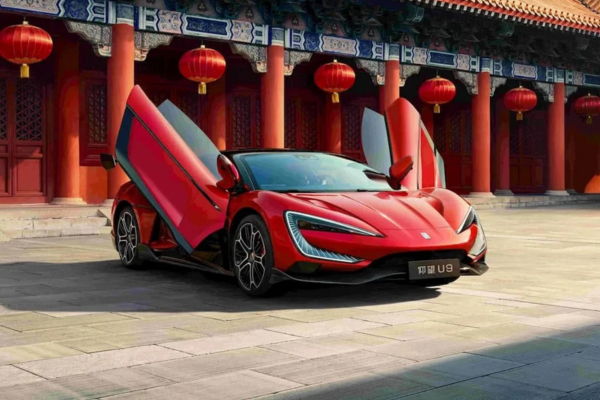
Chinese EV brands such as BYD and Xiaomi are at the center of a growing global debate over trade barriers, pricing power, and national security concerns in the United States and Europe.
BYD and Xiaomi EVs Reshape Global Auto Expectations
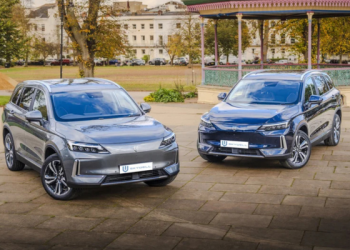
A recent experience in the United Kingdom highlighted growing consumer interest in Chinese electric vehicles. A rented BYD Sealion SUV was described as smooth, comfortable, and well-designed, reflecting rising competition in the global EV market.
Meanwhile, automotive reviewers have also praised Xiaomi SU7 Max, with one Wall Street Journal reviewer describing extended driving experience as highly advanced, highlighting features such as large infotainment integration, extended driving range, and in-car systems including entertainment and connectivity tools.
The reviewer compared the experience favorably against Tesla vehicles, noting stronger user integration and pricing advantages.
Tesla, Ford, and Competitive Pressure in EV Markets
Executives within the traditional auto industry have acknowledged growing pressure. The CEO of Ford Motor Company reportedly described the Xiaomi vehicle as “fantastic” while also calling the rise of Chinese automakers an “existential threat” to U.S. manufacturers.
The tension reflects a widening gap between U.S. automakers, including Tesla, and rapidly scaling Chinese EV producers offering lower-cost and feature-rich alternatives.
Auto Prices, Debt, and Consumer Pressure in the U.S.
The U.S. automotive market faces rising affordability concerns. Average new vehicle prices are approximately $50,000, while auto loan debt has reached $1.68 trillion, leaving consumers with increasing financial strain.
New vehicles under $20,000 are now rare in the U.S. market, limiting entry-level affordability for buyers.
By contrast, Chinese automakers are reported to sell vehicles domestically for as low as $8,000, with expectations that export pricing could approach $20,000 if market access expands.
Tariffs, National Security, and Trade Barriers
U.S. policymakers argue that Chinese EV imports raise national security risks, particularly related to data security and digital systems embedded in modern vehicles.
As a result, sweeping regulatory measures and tariffs have significantly restricted access to Chinese vehicles in the U.S. market.
However, critics argue these restrictions are designed to shield domestic automakers from competition rather than purely address security concerns.
Global Expansion of Chinese Automakers
Chinese EVs are already expanding globally, with significant market penetration in Europe and Mexico. Reports suggest approximately one in ten vehicles sold in Europe are Chinese-made, while Mexico sees even higher adoption rates.
Industry observers argue that limiting competition may slow innovation in the U.S. auto sector while preserving higher consumer prices.
Read also: Chinese EV tariffs keep cars under $30k away from US buyers






![Toyota sales [Source Reuters]](https://autojournal.africa/wp-content/uploads/2024/09/Toyota-sales-Source-Reuters-120x86.png)