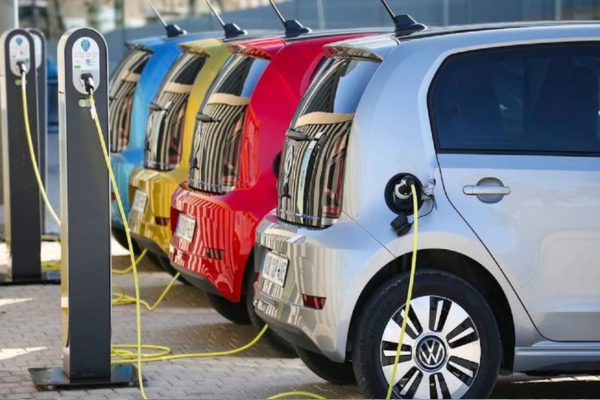
Global demand for electric vehicles (EVs) rose for a second straight month in April as high petrol prices continued to push consumers away from traditional fuel-powered cars, according to new data from consultancy Benchmark Mineral Intelligence.
Worldwide registrations of battery-electric vehicles and plug-in hybrids climbed 6% from a year earlier to 1.6 million units in April, the consultancy said. The figure, often used as a proxy for sales, showed that the global shift toward cleaner transport is still gaining speed despite regional slowdowns.
The rise came as governments kept measures in place to manage fuel prices after conflict in the Middle East disrupted a major oil shipping route.
Benchmark Mineral Intelligence said demand remained supported by policy incentives, rising petrol prices, and the growing global reach of Chinese automakers.
Electric Vehicles (EVs) Gain Strength In Europe
Europe recorded some of the strongest growth. Registrations in the region jumped 27% in April to around 400,000 units. Countries in the European Economic Area and Switzerland have also committed nearly 200 billion euros to support their EV ecosystem, according to a recent study.
The funding covers areas such as EV charging infrastructure, battery production, and manufacturing support.
Even with European Union tariffs on Chinese-made vehicles, Chinese brands are still expanding across the region.
Benchmark Mineral Intelligence said 22% of electric vehicles and plug-in hybrids sold in Europe during the first four months of 2026 were made in China. That was up from 19% a year earlier.
The data shows that Chinese automakers continue to gain market share despite trade pressure.
Chinese EV Manufacturers Expand Global Reach
China remained the world’s largest EV market, even though registrations there fell 8% in April to about 850,000 vehicles.
The decline followed the end of government support measures, including trade-in incentives and tax breaks for EV buyers. Still, Chinese manufacturers increased exports sharply.
Exports of electric vehicles topped 400,000 units in April alone, while total vehicle exports reached nearly 1.4 million units during the first four months of 2026. That figure was more than double the level recorded a year earlier.
The numbers highlight how Chinese automakers are relying more on international markets as domestic support policies fade.
North America Sees Sharp Decline
North America moved in the opposite direction. EV registrations in the region dropped 28% to 120,000 units in April after the end of a U.S. tax credit programme.
Proposals from President Donald Trump’s administration to ease carbon dioxide emissions rules also added uncertainty to the market.
Mexico stood out as a rare bright spot. EV sales there rose nearly 50% this year, while Canada recorded a 7% decline.
Industry analysts expect Canada’s numbers to improve after a new incentive programme begins.
The Global EV Race Continues
The latest figures show that the global EV market remains uneven, with policy decisions playing a major role in demand.
Regions with strong incentives and infrastructure spending continue to grow faster, while markets cutting subsidies are seeing slower momentum.
Still, rising fuel prices and expanding global production are keeping the electric vehicle industry on a long-term growth path.
For automakers, battery suppliers, and clean-energy investors, the race for global EV leadership is far from over.
Read also: Ford doubles down on affordable EV pickup despite $20bn setback
![Tesla [Reuters]](https://autojournal.africa/wp-content/uploads/2026/04/Tesla-Reuters-350x250.png)