By Ijaseun Isaiah
Fuel is the single biggest “bill” an airline has to pay. But with oil prices fluctuating unpredictably, how do airlines manage to remain profitable? They don’t just buy fuel, they hedge it. It’s a financial shield that can either save an airline or crush it. Fuel hedging is a make-or-break strategy for carriers around the world.
Airlines sign contracts to lock in a fixed price for jet fuel months or even years in advance. And fuel is no small matter; it can account for up to 30–40% of an airline’s operating costs.
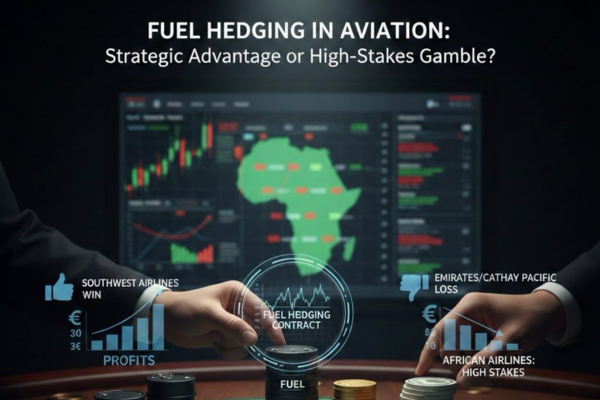
If global oil prices soar, the airline wins.
They’re still paying the cheaper, pre-agreed price. That stability helps them plan ticket pricing, routes, expansion, and long-term strategy without constantly worrying about oil market chaos.
Fuel hedging is not insurance. It’s a calculated gamble.
If oil prices crash, an airline locked into a high price is stuck paying more than competitors buying fuel at the new, cheaper market rate.
And we’ve seen both sides of this story. Southwest Airlines is often called the legend of hedging. By locking in low fuel prices years ahead, the airline saved billions of dollars while others struggled during oil price spikes. It gained a major competitive advantage.
But then there’s the other side. Airlines like Emirates and Cathay Pacific have, at different times, lost hundreds of millions of dollars after hedging at high prices, only to watch oil markets collapse soon afterward.
It’s less like buying insurance… and more like playing financial poker with global oil markets.
For African airlines, fuel hedging can be even more critical, and more complicated.
Many carriers operate in economies with volatile currencies. Jet fuel is traded globally in US dollars.
So, if local currencies weaken while oil prices rise at the same time, the financial pressure can be devastating.
In markets like Nigeria or Kenya, where operating costs are already high, a sudden fuel spike can wipe out profits instantly. Hedging offers protection. But there’s a problem.
These contracts require significant upfront cash or strong credit backing. Many smaller African airlines simply don’t have the financial muscle to enter large hedging agreements. That leaves them fully exposed to oil price shocks.
For some, one bad fuel cycle can mean the difference between expansion… and bankruptcy.
Fuel hedging isn’t just financial jargon. It quietly shapes airline profitability, route planning, and even the price of your ticket.
Read also: Eight facts behind the fragile state of regional aviation in UK











![Tesla [Reuters]](https://autojournal.africa/wp-content/uploads/2026/04/Tesla-Reuters-120x86.png)