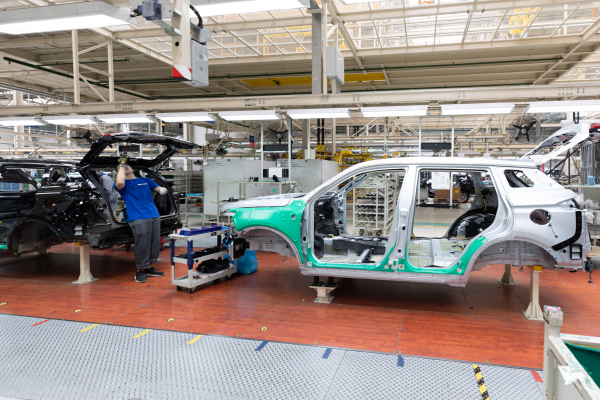
On a cold February morning outside Mercedes‑Benz’s vast Untertuerkheim plant, leaflets marked “Game-changer” were handed to early-shift workers, signalling a new front in Germany’s political battle; the factory floor.
The flyers came from Zentrum, a self-styled union affiliated with the far-right Alternative for Germany (AfD), ahead of works council elections taking place across German companies from March to May.
Zentrum founder Oliver Hilburger, himself a Mercedes employee, says mainstream unions failed to shield the German automotive industry from thousands of job cuts as manufacturers struggle with the shift to electric vehicles and rising Chinese competition.
Works Council Elections and Political Risk
Works councils, which give about 37% of German employees formal representation, are a pillar of Germany’s post-war labour model. Officials at IG Metall say far-right-linked candidates plan to contest seats at major firms including Volkswagen and Audi.
While Zentrum currently holds around 150 works council seats nationwide, its leadership views success at “showcase companies” like Mercedes and Volkswagen as symbolically critical.
“A works councillor can address tens of thousands of workers at assemblies,” said Lukas Hezel of IG Metall. “That is more powerful than local politics.”
AfD’s Broader Institutional Strategy
AfD leaders have openly supported Zentrum, arguing elections alone are insufficient to reshape society. The party, classified as right-wing extremist by federal authorities, is seeking footholds beyond parliament.
An exit poll by Infratest dimap showed 38% of blue-collar workers voted AfD, compared with just 12% for the Social Democrats, highlighting the scale of disaffection among industrial workers.
Unions Push Back
Traditional unions warn that weakening organised labour risks democratic erosion, drawing parallels with the fragmentation of unions during Germany’s 1930s economic crisis.
Mercedes, Volkswagen and Audi declined to comment directly on elections but reiterated commitments to democratic values, tolerance and diversity.
As job insecurity deepens, the contest over who speaks for Germany’s workers is moving decisively from ballot boxes to factory gates.
Read also: Germany urges EU to ease 2035 petrol, diesel engine ban as auto job cuts rise