Chinese carmaker BYD has entered India’s luxury car market with two new electric vehicles, including one priced at $166,600, as it seeks to win wealthy buyers from brands such as Mercedes-Benz and Toyota.
The move puts BYD in direct competition with some of the biggest names in the luxury car business. It also comes as the company seeks to grow its premium image and boost profits.
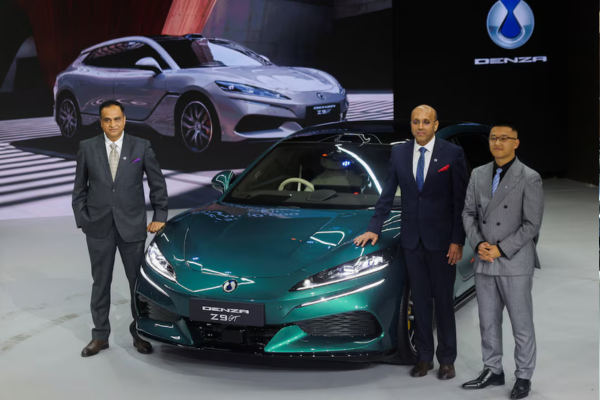
BYD launched its Denza luxury brand in India on Friday, with a seven-seat electric SUV called the D9 and a four-door performance electric car called the Z9 GT.
The launch gives wealthy Indian buyers more options in a market where luxury vehicles account for only a small share of total car sales.
Denza D9 and Z9 GT Prices in India
BYD priced the Denza D9 at $95,600 and the Denza Z9 GT at $166,600.
The D9 will compete with the Mercedes-Benz V-Class and Toyota Vellfire. The Z9 GT will target buyers looking for a high-performance electric vehicle.
The two models mark a new step in BYD’s plans to grow its luxury car business outside China.
“With this brand, we are taking an important step towards addressing the growing demand for distinctive luxury mobility experiences,” Rajeev Chauhan, senior vice president at BYD India, said in a statement.
The launch also gives BYD a chance to reach buyers who are willing to pay more for luxury, design and performance.
India Luxury Car Market Offers Higher Profit Margins
India is the world’s third-largest car market, but its luxury car market is still small. Luxury cars made up just over 1% of the country’s 4.4 million passenger car sales in 2025.
That small share points to a market with room for more brands. It also shows why global carmakers are keen to reach India’s wealthiest buyers. Luxury vehicles can offer higher profit margins than mass-market cars. There is also less competition in this part of the market.
Mercedes-Benz, India’s largest luxury car seller, reported record revenue in the country in 2025. The company said strong demand for high-end vehicles priced above $159,000 helped drive the result.
That demand is one reason BYD is making a bigger push into the premium segment.
BYD India Expansion Faces Import Tariffs of Up to 100%
BYD still faces a major challenge in India: car import tariffs. The company already sells mass-market and premium passenger vehicles in the country. But it continues to import cars from China.
India has strict investment rules for countries that share its land borders. These rules have limited BYD’s ability to bring money into India to set up a local factory.
As a result, its imported vehicles face tariffs of up to 100%.
These high duties make the market harder to enter, even though luxury cars offer better margins and face fewer rivals.
BYD must now compete for wealthy buyers while dealing with the cost of bringing its vehicles into India.
Luxury Electric Vehicle Competition Is Growing
BYD is not the only carmaker seeking a bigger share of India’s premium car market.
Hyundai, which entered India more than two decades ago, plans to launch its Genesis luxury brand in the country in 2027.
The move would add another global name to a market already served by Mercedes-Benz and Toyota.
BYD also launched Denza in Europe earlier in 2026 as part of a wider plan to improve its premium image and boost profitability.
India is now another key test of that plan. For BYD, the challenge is clear: win over buyers who can afford luxury cars, grow sales in a small premium market and manage the high costs of imports.
The result will help show how far the Chinese carmaker can go in taking on established luxury brands outside its home market.