Tesla’s Cybertruck was designed to change the future of electric pickup trucks. Instead, its short commercial life is becoming a lesson in how ambitious product designs can fail to meet market realities.
The electric vehicle maker is discontinuing the controversial pickup after just a few years, following weak sales, production delays, higher prices and limited access to major international markets.
The decision marks a major setback for Tesla and its chief executive, Elon Musk, who presented the vehicle in 2019 as a new direction for the global electric vehicle market.
Musk said Tesla would add another shift at its Texas factory to complete outstanding orders before dismantling the production line. The facility will then make way for the company’s Cybercab robotaxi, planned for next year.
He also said Tesla would have to refund deposits to many customers.
The Cybertruck’s exit has drawn comparisons with Ford’s Edsel, a vehicle launched in 1957 and discontinued two years later after commercial failure.
Cybertruck sales collapse as demand weakens
The vehicle’s sales figures show the scale of its problems. According to Kelley Blue Book, Tesla sold 20,237 Cybertrucks in the United States in 2025. This was 48% below the 38,965 units sold in 2024.
Even large orders from Musk’s SpaceX in 2025 could not prevent the decline.
The figures point to a growing challenge for Tesla’s electric pickup truck strategy, especially as the vehicle depended heavily on the US market.
The Cybertruck’s commercial problems began before deliveries started.
When Musk introduced the vehicle in 2019, Tesla promised a starting price of $39,900. However, the production version eventually launched at $60,990. That represents an increase of $21,090, or about 53%.
Tesla had also promised deliveries by late 2021. However, customers did not begin receiving the vehicle until the end of 2023.
The vehicle also faced several recalls, adding to the problems surrounding its launch.
Design and safety concerns limited global expansion
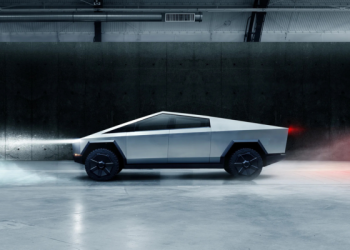
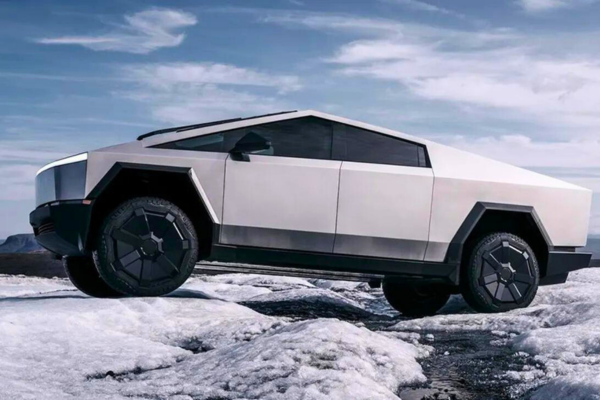
The Cybertruck’s unusual design became one of its biggest commercial weaknesses. Its angular body and stainless-steel exoskeleton attracted attention, but also raised concerns among safety experts.
During its 2019 unveiling, Musk demonstrated the strength of its supposedly shatterproof windows by having Tesla’s head of design throw metal balls at them. Two windows developed large cracks.
Experts also warned that the vehicle’s stiff exterior could pose risks to pedestrians, cyclists and other road users.
These concerns created regulatory challenges.
The Cybertruck was never approved for sale in Europe or China, two of the world’s biggest electric vehicle markets. It was sold in only a handful of markets, including Saudi Arabia.
This limited Tesla’s ability to reach customers outside the United States.
Europe offers a missed opportunity for Tesla
The Cybertruck’s limited international reach is particularly significant given the growth of Europe’s EV market.
According to the European Automobile Manufacturers’ Association (ACEA), electric vehicle sales in the European Union increased almost 49% in the first nine months of 2026 compared with the same period in 2025.
Tesla’s sales in the region rose 69% over the same period. The figures suggest that a vehicle designed to meet European market requirements could have had access to a growing customer base.
Instead, the Cybertruck remained largely dependent on the US market.
Its prospects were further weakened by the Trump administration’s decision last year to remove a $7,500 electric vehicle tax credit.
The policy change added pressure to a vehicle that already faced questions about its price, design and customer appeal.
What Tesla’s Cybertruck failure means for the EV industry
The Cybertruck’s discontinuation highlights the risks facing automotive manufacturers that build products around bold design concepts without securing broad market acceptance.
Its problems were not limited to weak sales. Delayed production, a higher launch price, recalls and regulatory restrictions combined to limit its commercial potential.
Tesla’s decision to replace the production line with the Cybercab also signals a shift in its manufacturing priorities.
However, the company’s experience offers a wider lesson for the electric vehicle industry: innovation alone does not guarantee commercial success.
A product must also meet customer expectations, comply with safety rules and compete in the markets where demand is growing.
For Tesla, the Cybertruck’s short run shows what can happen when a vehicle attracts global attention but struggles to find enough customers.
Read also: Tesla Cybertruck sales slump 28% as electric pickup market struggles