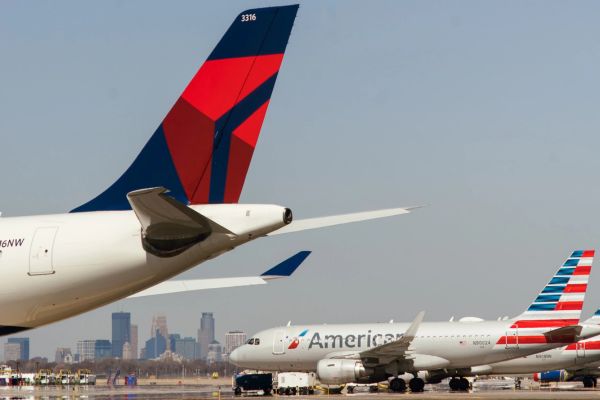
Late-arriving aircraft are the biggest cause of US airline delays, while new data show a wide gap in airline reliability.
A flight can be delayed long before its passengers reach the airport. An aircraft held up by a storm or airport congestion may arrive late for its next trip. That delay can then spread across several flights, leaving passengers waiting and putting connecting journeys at risk.
This chain reaction is the biggest cause of flight delays in the United States, according to an aviation analysis published by Simple Flying on October 20, 2026.
The US Federal Aviation Administration (FAA) groups flight delays into five main types: late-arriving aircraft, airline-related problems, security, weather and the National Airspace System (NAS).
Each can disrupt travel, but some are harder for airlines to control.
Late-arriving aircraft: The biggest cause of flight delays
Airlines need their aircraft in the sky to earn revenue. This means planes often make several trips in one day, with little time between flights.
When one trip runs late, the next flight may also leave behind schedule. The FAA calls this process “delay propagation.”
Short-haul aircraft face greater pressure because they often operate many flights each day. With limited time on the ground, making up lost minutes can be difficult.
Airlines with large hubs may have more room to respond. They can replace a late aircraft with another plane at the hub, helping to prevent further delays.
Airline on-time performance: Delta leads September rankings
Not all flight delays begin outside an airline’s control. Problems with cleaning, catering, aircraft damage, baggage and late connecting passengers can also affect departure times.
These are known as carrier delays. Such problems matter because airlines can take steps to reduce them. Better planning and stronger operating systems can help improve reliability.
Data from aviation analytics firm Cirium showed that Delta Air Lines led seven listed US carriers in September 2026, with 82.52 percent of flights arriving on time.
Alaska Airlines followed at 80.73 percent, while United Airlines recorded 78.65 percent.
American Airlines reached 77.11 percent, ahead of Frontier at 75.49 percent and JetBlue at 74.64 percent.
Southwest Airlines recorded 71.14 percent.
The gap between Delta and Southwest was 11.38 percentage points. Delta has also used the term “On-Time Machine” in its advertising, showing how reliability can shape an airline’s public image.
Air traffic control infrastructure: Why airports cause delays
Flights can also be delayed by problems within the US National Airspace System.
These include airport congestion, air traffic control staff shortages, construction and software failures.
In January 2023, a failed update to the FAA’s NOTAM system caused a nationwide ground stop. More than 10,000 flights were delayed.
In 2025, controllers managing arrivals into Newark lost their data connection for 90 seconds. The incident caused major delays and cancellations.
The FAA and the US Department of Transportation have pledged greater investment in aviation infrastructure and controller recruitment.
The impact of those efforts remains uncertain.
Severe weather and airport security delays
Bad weather remains another major threat to flight schedules. Thunderstorms can bring heavy rain, poor visibility, turbulence and dangerous changes in wind speed. Airports may stop departures, while arriving aircraft may need to wait or divert.
Snow, ice, fog and hurricanes can also reduce airport capacity.
Security delays are less common, accounting for under one percent of US airline delays. They can result from terminal evacuations, screening equipment failures or security breaches.
In early 2026, staffing shortages linked to a partial shutdown of the Department of Homeland Security caused long airport security queues.
Airline operations management: Why reliability matters
Flight delays affect more than departure boards. They can lead to missed connections, disrupt travel plans and damage an airline’s reputation.
For carriers, the challenge is not only preventing delays but also recovering when problems occur. Strong operating systems can help airlines restore schedules after storms or other major disruptions.
The wider lesson is that a delayed flight may be the result of events far beyond the airport where passengers are waiting.
Read also: How delayed jets, engine recalls stretch global airline balance sheets to breaking point