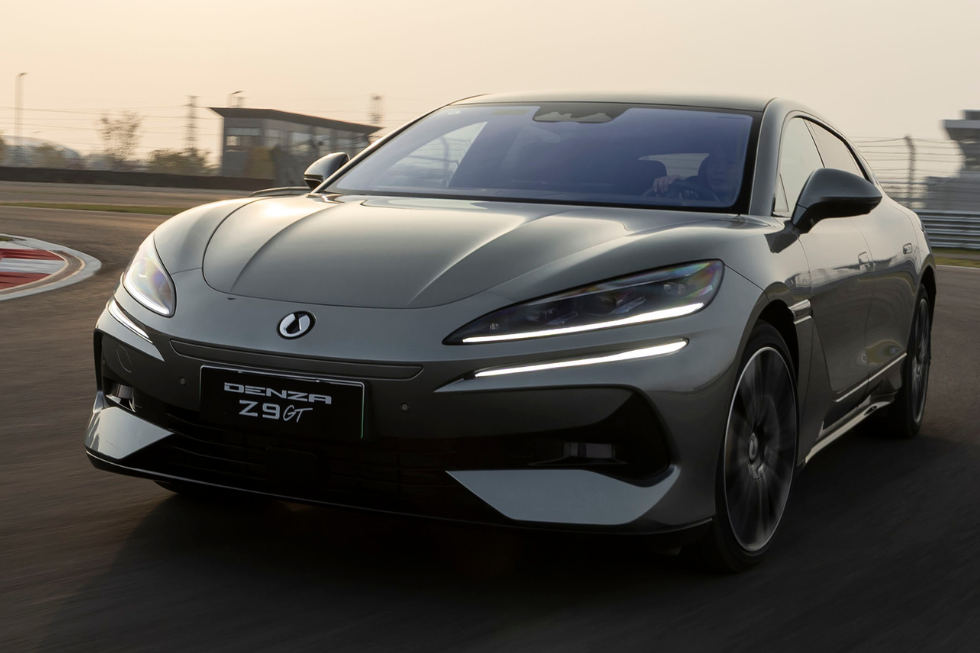
Chinese carmaker BYD is rewriting expectations in Europe’s electric vehicle market. Its new Denza Z9 GT arrives not as a budget alternative, but as a bold luxury contender.
For European buyers, the message is clear. This is not a cheap import. It is a high-performance electric car designed to rival the continent’s most prestigious brands.
The figures are striking. In China, the Denza Z9 GT starts at around $39,300. In Europe, the same model is priced from roughly $134,500. That is more than three times higher, raising questions about what is driving the cost.
The car itself delivers impressive performance. It produces 1,140 horsepower, offers up to 372 miles of range, and can charge from 10% to 97% in just nine minutes. Advanced features include a “crab-walk” function, allowing the car to move diagonally into tight parking spaces.
At first glance, tariffs appear to explain the price gap. The European Union applies a 17% countervailing duty on Chinese-built EVs, alongside a 10% import tariff. Together, these add roughly 27% to the base cost.
However, the numbers tell a different story. A 27% increase on a $39,000 vehicle adds about $10,500. Even after including shipping, local compliance, VAT, and dealer costs, the total still falls far short of $134,000.
Industry analysts say the gap reflects strategy, not just cost. Research from S&P Global Mobility suggests pricing is being used deliberately to position the Denza Z9 GT as a premium product.
This positioning is no accident. At its European price point, the car sits just below models like the Porsche Panamera. It signals BYD’s intention to compete at the top end of the market, not the bottom.
The move challenges long-held assumptions about Chinese vehicles. While BYD has built its global growth on affordability, analysts estimate it retains up to a 25% manufacturing cost advantage over many European rivals.
But the Denza Z9 GT targets a different audience. It is aimed at buyers who value performance, status, and cutting-edge technology, rather than price alone.
Breaking into Europe’s luxury market is not easy. Brands such as Lexus, Genesis, and Infiniti have all struggled to win over high-end buyers despite strong products. Trust and brand heritage remain powerful factors in purchasing decisions.
BYD appears to be aware of this challenge. Its pricing strategy allows for higher margins, which can fund dealership networks, charging infrastructure, and high-profile marketing campaigns.
The company’s European launch reflects that ambition. Actor Daniel Craig, best known for his role as James Bond, fronted the campaign. The choice signals a clear intent to align the brand with sophistication and prestige.
In the end, tariffs may explain part of the price. But ambition explains the rest.
Read also: Auto giants BYD, Ford face sales slump as buyers hunt for value