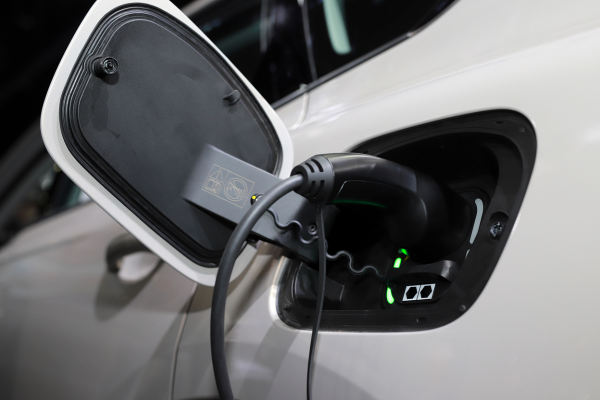
The U.S. Transportation Department on Tuesday proposed sharply tightening Buy America requirements for government-funded electric vehicle charging stations, a move that could change how fast chargers are built across the country.
Under the proposal, American content in federally funded chargers would rise from 55% to as much as 100%, and production would be required inside the United States. The rule would take effect as soon as it is finalised.
The plan reverses a key decision made in 2023, when the Biden administration waived some domestic content rules to speed up deployment under a $5 billion EV charging infrastructure funding program.
Buy America Rules and Domestic Manufacturing
Transportation Secretary Sean Duffy said the stricter rules would strengthen U.S. domestic manufacturing, create jobs, and make American companies more competitive. He also warned that foreign-made components could pose cybersecurity vulnerabilities.
The department said it believes manufacturers now have the capacity to produce chargers in U.S. facilities.
“If Congress wants to see these chargers built, we put America First,” Duffy said.
EV Charging Infrastructure Funding at Risk
Environmental group Sierra Club sharply criticized the proposal, calling it a bad-faith effort that could block the use of funds and slow charger deployment.
“It would stall EV charging deployment and deny communities access to clean, affordable transportation,” the group said.
During the Biden administration, the Federal Highway Administration waived domestic content rules for steel, iron, and construction materials. Some Republicans argued that policy risked subsidizing Chinese-made products.
Court Ruling and Political Clash
Last month, U.S. District Judge Tana Lin ruled that President Donald Trump’s administration unlawfully suspended funding for EV charger expansion. The ruling followed a lawsuit by 20 Democratic-led states.
The case involved the National Electric Vehicle Infrastructure Formula Program, created under the 2021 infrastructure law.
Despite the ruling, Congress in January redirected $879 million previously approved for EV charging to other infrastructure priorities.
The Trump administration has also pushed policies favoring gas-powered vehicles while cutting EV incentives.
Read also: Electric vs petrol cars: One driver’s five-year cost data reveals where the real savings are