
• News
    • Tech
    • Lifestyle
    • Business
    • Opinion
    • Premium
  • Reviews
  • Events
    • Nigeria
    • South Africa
  • Tools
    • Price Guide
    • Find your idea car
    • Car valuation
    • Sell your car
    • Car insurance quote
    • Locate a dealer
    • Deals
  • For Sale
    • New Cars for sale
    • Cheap Cars for sale
    • Bikes for sale
    • Trucks for sale
    • Boats for sale
    • Jets for sale in Africa
    • Cars under 5m
    • EV in Nigeria
    • EV in South Africa
Sunday, May 10, 2026
  • Login
Auto Journal Africa
  • News
    • Tech
    • Lifestyle
    • Business
    • Opinion
    • Premium
  • Reviews
  • Events
    • Nigeria
    • South Africa
  • Tools
    • Price Guide
    • Find your idea car
    • Car valuation
    • Sell your car
    • Car insurance quote
    • Locate a dealer
    • Deals
  • For Sale
    • New Cars for sale
    • Cheap Cars for sale
    • Bikes for sale
    • Trucks for sale
    • Boats for sale
    • Jets for sale in Africa
    • Cars under 5m
    • EV in Nigeria
    • EV in South Africa
Ask Autojorunal AI
No Result
View All Result
  • News
    • Tech
    • Lifestyle
    • Business
    • Opinion
    • Premium
  • Reviews
  • Events
    • Nigeria
    • South Africa
  • Tools
    • Price Guide
    • Find your idea car
    • Car valuation
    • Sell your car
    • Car insurance quote
    • Locate a dealer
    • Deals
  • For Sale
    • New Cars for sale
    • Cheap Cars for sale
    • Bikes for sale
    • Trucks for sale
    • Boats for sale
    • Jets for sale in Africa
    • Cars under 5m
    • EV in Nigeria
    • EV in South Africa
No Result
View All Result
Morning News
No Result
View All Result
Home Opinion

How mechanics, spare parts dealers swindle Nigerian car owners

David Ijaseun by David Ijaseun
July 20, 2025
in Opinion, Premium
0
Mechanic and spare part market
2.1k
SHARES
14.9k
VIEWS
Share on FacebookShare on Twitter

When Mikel, a 28-year-old finance professional in Lagos, bought his first car for ₦4.8 million, he thought he had made a smart move. A trusted mechanic had inspected the vehicle and given his nod. But just two weeks later, the car began jerking violently, emitting embarrassing noises, and draining his wallet.

“I spent more fixing that car than I paid to buy it,” Mikel said. “They kept changing parts. I later found out most of them were fake.”
READ ALSO

Copa Airlines’ $13.5 Billion Boeing Bet — What It Really Signals for Aviation and Investors

F1 midseason rule changes aim to fix safety and speed concerns ahead of Miami Grand Prix

Mechanics and spare part dealers

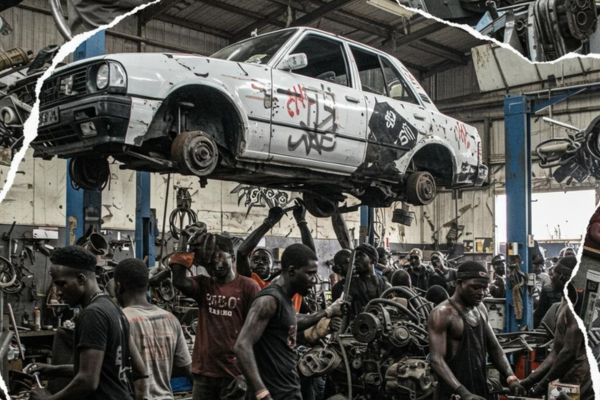
Mikel’s experience is shared by thousands of Nigerian car owners who have fallen victim to a widespread racket involving inflated repair costs and counterfeit parts. These car owners are losing billions of naira to an informal yet powerful alliance between some mechanics and spare-parts dealers. They inflate prices, supply fake components, and pocket illegal kickbacks, all while consumers remain largely in the dark.

Inflated prices, counterfeit parts, and the mechanic-deceit loop

According to the Standards Organisation of Nigeria (SON), over 60% of spare parts sold in Nigeria are substandard or counterfeit, putting not just wallets but lives at risk.

In mega-cities like Lagos, Abuja, and Port Harcourt, mechanics routinely inflate part prices by 30–50% while secretly replacing genuine components with cheaper imitations, according to the experience of car owners who spoke with Autojournal. These fake parts often fail within weeks, sending unsuspecting drivers back to the workshop, deepening the cycle of dependency and financial loss.

David Olaniyi, an automotive analyst, said the scam is both simple and lucrative. “I once had a mechanic who received a 10–20% commission from spare parts sellers for referring customers. So, they often exaggerated faults or recommended unnecessary replacements,” he said. “While most drivers had no idea, I was an exception. I followed him to the spare parts dealer, and they got into a fight. That’s when the spare parts dealer opened up to me about what was really going on.”

In another experience, Oluwaseun, a young tech worker in Abuja, was charged ₦38,000 for a brake pad change that should have cost ₦12,000. “When I questioned it, the mechanic warned me not to bring my own parts or risk my ‘safety,’” he said.

High demand fuels the fraud as spare parts imports top $1 billion annually

Nigeria’s dependency on vehicle repairs is enormous. The country is home to over 11 million vehicles, many of them second-hand, and each needing frequent parts and maintenance.

This demand feeds a massive market: according to the National Automotive Design and Development Council (NADDC), Nigeria spends more than $1 billion every year importing vehicle spare parts. Motorcycle parts alone account for $19 million in imports annually.

“The value chain is huge, but mostly informal and unregulated,” said Joseph Osanipin, NADDC’s Director-General. “The cost is not just in naira, it’s in trust, safety, and national productivity.”

In addition, stolen vehicles are often dismantled and resold as parts. In Ondo State, police arrested Rotimi Akinsanoye, who confessed to stealing seven cars and selling them in pieces to dealers in Lagos.

The fight back: Government, startups, and local manufacturing step in

To counter this rising tide of fraud, several initiatives are underway. The NADDC is spearheading the Nnewi Auto Industrial Park, a shared facility designed to boost local manufacturing of spare parts and reduce import reliance. The council is also training engineers using advanced tools like the Midas NFX software to design and produce high-quality, locally-made components.

“We aim to reach 40% local content in vehicle assembly,” said Fidelis Achiv, NADDC’s Director of Research and Development. “Even if we produce just 10 core components reliably, the economic impact will be massive.”

Startups like Fixit45, Mecho Autotech, and Carserve are working to digitise the auto-repair process. Their platforms connect car owners with verified mechanics, standardize pricing, and offer warranties, making fraud harder to commit and easier to track.

Meanwhile, experts urge car owners to take proactive steps:

  • Always demand to see packaging and serial numbers.
  • Insist on taking old parts back after replacements.
  • Use certified repair centers with clear receipts and transparent pricing.

Until enforcement and awareness rise, Nigeria’s car owners will remain vulnerable. But the tools for change are emerging.

Read more on Why roadside mechanics are more valuable than some university mechanical graduates 
Tags: HeadlineMechanicspare parts

Related Posts

Copa Airlines
Aerospace

Copa Airlines’ $13.5 Billion Boeing Bet — What It Really Signals for Aviation and Investors

May 5, 2026
Miami Grand Prix
Business

F1 midseason rule changes aim to fix safety and speed concerns ahead of Miami Grand Prix

May 3, 2026
Donald Trump and EU
Cars/SUVs

US raises pressure on Europe as Trump hikes auto tariffs to 25%

May 3, 2026
global automakers
Business

Profits on paper: Automakers book billions in tariff refunds, but cash remains uncertain

May 1, 2026
Geely
Cars/SUVs

Why America may never see Geely EVs on its roads

April 28, 2026
Tesla Cybertruck
Electric Vehicles

The true cost of Tesla Cybertruck ownership for rideshare drivers

April 27, 2026
Next Post
Oleksandr Usyk cars

The story behind every car Oleksandr Usyk has owned

POPULAR NEWS

Inferno at Toyota 1000 Desert Race consumes 49 cars

Inferno at Toyota 1000 Desert Race consumes 49 cars

July 3, 2023
Mobius Motors

Mobius Motors: Rising taxes, competition ends Kenyan SUV maker’s journey

August 7, 2024
Autojournal car race

Get ready for the biggest RACE show this December in Nigeria

August 12, 2024
From style to sustainability: How Geely Auto is shaping the future of luxury vehicles

From style to sustainability: How Geely Auto is shaping the future of luxury vehicles

October 25, 2024
Rolls-Royce La Rose Noire Droptail 2026, the most expensive car in 2026

Ultra-luxury: The 10 most expensive cars in the world in 2026

January 7, 2026

EDITOR'S PICK

Lamborghini

Nigeria’s love for Lamborghinis: The luxury, the scrutiny, and the hidden costs

March 18, 2025
Seme Border

Reopened Seme border: Importation ban still in place, says Nigerian Customs

July 3, 2023
Audi Q6 e-tron 2023 at IAA Mobility 2023

A glimpse of tomorrow’s electric vehicles debuted at IAA Mobility 2023

September 10, 2023
Toyota Olympics

Toyota brings sustainable “Mobility for All” to 2024 Paris Olympics

August 4, 2024

About

Auto Journal Africa is the leading online and print magazine for automobiles in Africa.

Follow us

Recent Posts

  • Acely EV01 signals Nigeria’s push into electric SUV manufacturing
  • Ford doubles down on affordable EV pickup despite $20bn setback
  • Tesla recalls more than 218,000 vehicles over rearview camera safety concern
  • One American car or five Chinese EVs? The price gap reshaping the global auto industry

Links

  • Privacy Policy
  • About Us
  • Contact Us
  • Terms & Conditions
  • News
  • Reviews
  • Events
  • Tools
  • For Sale

© 2023 Auto Journal

No Result
View All Result
  • News
    • Tech
    • Lifestyle
    • Business
    • Opinion
    • Premium
  • Reviews
  • Events
    • Nigeria
    • South Africa
  • Tools
    • Price Guide
    • Find your idea car
    • Car valuation
    • Sell your car
    • Car insurance quote
    • Locate a dealer
    • Deals
  • For Sale
    • New Cars for sale
    • Cheap Cars for sale
    • Bikes for sale
    • Trucks for sale
    • Boats for sale
    • Jets for sale in Africa
    • Cars under 5m
    • EV in Nigeria
    • EV in South Africa

© 2023 Auto Journal

Welcome Back!

Sign In with Google
OR

Login to your account below

Forgotten Password?

Retrieve your password

Please enter your username or email address to reset your password.

Log In
Are you sure want to unlock this post?
Unlock left : 0
Are you sure want to cancel subscription?