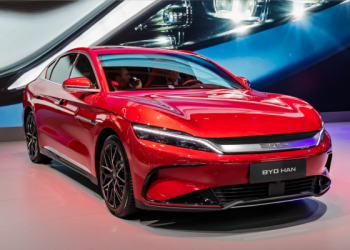
The European Union is preparing new guidelines that could shape how Chinese electric vehicles (EVs) are priced in Europe, as Chinese automakers continue to expand into new global markets.
China’s commerce ministry said on Monday that the EU will issue guidelines on how Chinese exporters of electric vehicles can submit minimum price plans. The move signals a new phase in talks over EV trade between Europe and China, focusing on pricing rather than outright restrictions.
The announcement comes as BYD, one of China’s biggest electric vehicle makers, accelerates its expansion outside Europe, launching vehicles in South America’s second-largest economy, Argentina.
European Union Trade Guidelines and Minimum Price Plans
According to the Chinese commerce ministry, the European Union plans to provide guidance on the submission of minimum price plans for Chinese exporters of electric vehicles (EVs).
While details of the guidelines were not disclosed, the statement confirms that pricing has become a central issue in EU-China discussions over electric vehicle exports. Minimum price plans would set a framework for how Chinese automakers price vehicles entering the European market.
For exporters, pricing rules can influence volumes, margins, and long-term market access. For regulators, such guidelines are often presented as tools to ensure fair competition and market stability.
BYD Expands Beyond Europe with Argentina Debut
As Europe considers tighter pricing oversight, BYD is expanding its footprint in South America.
The company recently debuted in Argentina, where a BYD Song Pro electric vehicle was displayed during a launch event in Buenos Aires on October 8, 2025, according to Reuters photographs from the event.
Argentina marks another step in BYD’s broader international push, highlighting how Chinese automakers are diversifying markets as regulatory scrutiny increases in Europe.
Chinese Exporters Face a Shifting Global Landscape
For Chinese exporters, the combination of EU pricing guidelines and expansion into markets like Argentina shows a changing global environment for electric vehicles.
Europe remains a key destination for EV sales, but regulatory signals around pricing may affect how companies plan future exports. At the same time, growth in South America offers alternative routes for expansion.
China’s commerce ministry did not provide further comment on how the EU guidelines would be applied or when they would take effect.
Read also: China’s EV exports surge as domestic sales slow to 3-year low