A California startup says the dream of avoiding traffic by flying above it is moving closer to reality.
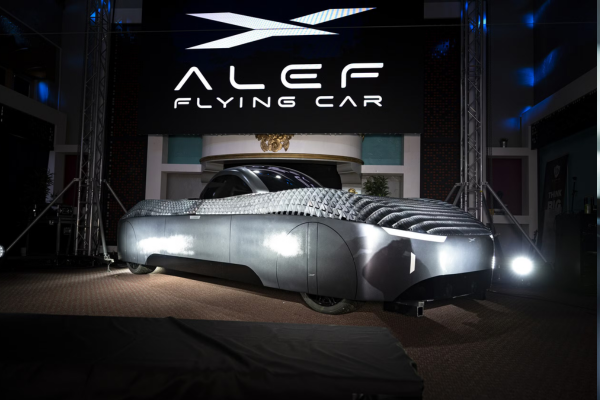
Alef Aeronautics says its all-electric Model A flying car has completed more than 1,000 test flights. The company also says it has started assembling its first customer vehicles at its Silicon Valley facility.
The Model A is designed to drive on public roads and take off vertically when needed. Alef describes it as a “road drivable” electric vehicle with vertical take-off and landing capability. Its official site says the vehicle is being developed to reduce congestion by allowing drivers to fly above traffic without needing a runway.
For early buyers, the benefit is clear. If the technology works as promised, it could offer a new way to move through crowded cities, combining the freedom of a car with the speed of short-distance flight.
Alef says the first hand-built vehicles could reach a small group of customers by late 2026. The company has said those early deliveries will be used under controlled conditions before wider production expands in 2027.
The vehicle will not be cheap. Alef lists the expected price of the Model A at about $299,999. Reservations are being offered at $150 for a standard preorder or $1,500 for priority access, according to company materials and reports.
The company says the Model A can travel about 200 miles on roads and around 110 miles in the air. Previous reports have also noted that the vehicle received a Federal Aviation Administration Special Airworthiness Certificate, allowing limited experimental flight activity.
That approval is important, but it does not mean flying cars are ready for mass use. FAA special airworthiness certification is limited in scope and is often used for testing, exhibition, research and development. Wider commercial use would require more regulatory progress, public safety confidence and clear operating rules.
Alef says demand is already strong. Its Wefunder page says the company has received 3,500 purchase orders worth about $1 billion, alongside more than 1,000 successful flights, 500 drives and 250 transitions.
The startup is also opening a public securities offering through Wefunder under SEC Regulation Crowdfunding. A company announcement said the fundraising route would allow members of the public to invest, subject to SEC rules and limits.
Jim Dukhovny, Alef’s chief executive, said production of the first flying car had started on schedule. He also said allowing the public to invest would help expand Alef’s community.
But major questions remain.
Flying cars still face serious challenges around certification, insurance, pilot training, air traffic control, battery performance and public acceptance. There is also the practical issue of where such vehicles can take off, land and operate safely in busy urban areas.
Some critics argue the Model A may be more of a technical showcase than a mainstream commuter vehicle in its first form. Popular Mechanics noted that the vehicle’s road use may be limited by its low-speed vehicle classification, raising questions about how practical it would be for everyday driving.
Still, Alef’s progress shows how quickly the boundary between the motor industry and aviation is changing. Carmakers, aviation startups and battery companies are all exploring new ways to move people through increasingly congested cities.
For now, the Model A is not a car for the average household. It is expensive, limited and still surrounded by regulatory uncertainty.
But if Alef can prove that its flying car is safe, useful and reliable outside controlled demonstrations, it could mark an important moment for urban mobility.
The flying car may not be ready to replace the family SUV. But for the first group of early customers, the future of transport may soon feel much closer than science fiction.
Read also: Flying cars edge closer to reality as Japan certifies SkyDrive eVTOL