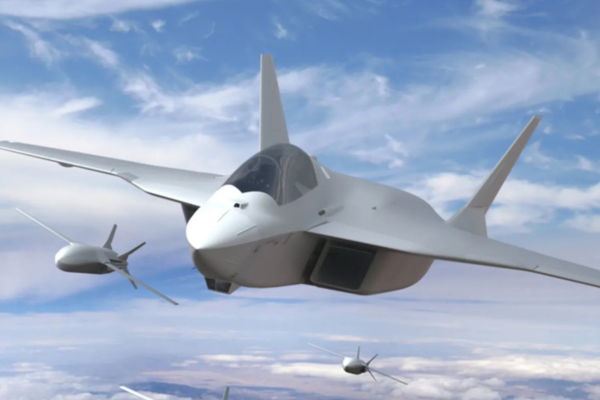
A flagship €100 billion ($115 billion) European fighter jet program, known as the Future Combat Air System (FCAS), has collapsed after years of disputes between Dassault Aviation and Airbus Defence and Space, officials in Berlin and Paris confirmed.
The project, launched in 2017, was designed to replace the Eurofighter and Rafale fleets by around 2040 and symbolize deep Franco-German military cooperation.
But that ambition has now unraveled.
German Chancellor Friedrich Merz and French President Emmanuel Macron agreed last week that the program could not move forward after manufacturers failed to resolve key disagreements, according to officials.
DEFENSE INDUSTRY DISPUTE OVER CONTROL AND TECHNOLOGY
At the heart of the breakdown were disputes over control, intellectual property rights, and aircraft design authority.
French firm Dassault Aviation pushed for greater leadership over the program, while Airbus Defence and Space resisted ceding control, leading to repeated deadlocks.
Neither company commented immediately on the decision.
EUROPEAN DEFENSE STRATEGY UNDER PRESSURE
The collapse comes at a sensitive time for Europe’s security landscape, with Western military officials warning of rising geopolitical threats and increasing expectations for Europe to strengthen its own defense capacity.
The FCAS project was widely seen as a cornerstone of future European defense contracts and industrial cooperation.
SHIFT TO SMALLER MILITARY SYSTEMS
Despite the setback, Germany and France say cooperation will continue in more limited forms. Officials are now focusing on a “Combat Cloud” system that links aircraft, drones, and battlefield sensors.
Defense representatives are expected to meet in mid-July to restructure cooperation into smaller projects.
German defense officials say the decision, though disappointing, was necessary. Critics, however, warn it signals deeper fragmentation in Europe’s defense ambitions.
As French Senate defense chief Cedric Perrin noted, President Macron “was the only one who still believed in the survival of FCAS.”
Read also: How NORAD air defense, F-15 Jets protected Super Bowl LX