Volkswagen’s electric future is facing fresh scrutiny after reports that the company has delayed the launch of a fully electric Golf.
The decision comes as Chinese electric vehicle maker Xpeng explores options for European production, including the possibility of using or acquiring an existing factory. Reuters, citing the Financial Times, reported that Xpeng had discussed buying a plant in Europe with Volkswagen and other carmakers.
The two developments have raised a bigger question for Europe’s car industry: who will move fastest in the shift to electric vehicles?
For drivers, the answer could matter. More competition may bring cheaper electric cars, better technology, and more choice in showrooms.
Volkswagen’s Golf is one of the most important cars in European motoring history. For decades, it has represented practical, everyday mobility for millions of families.
But the battery-electric version is no longer expected as quickly as once thought. Recent reports say Volkswagen has pushed the model beyond its earlier 2028 target, with its next-generation electric platform also facing delays.
That delay comes at a difficult time for Volkswagen. The German carmaker is trying to cut costs, manage weak demand in some electric vehicle segments, and respond to stronger competition from China.
Volkswagen has also been looking at how to deal with excess factory capacity in Europe. Reuters reported that VW chief executive Oliver Blume recently told workers the company was not currently in talks with Chinese manufacturers about solving that issue.
That makes the Xpeng story sensitive. It is not a confirmed factory takeover. It is better understood as part of a wider search by Chinese EV makers for European manufacturing options.
Xpeng has strong reasons to produce closer to European customers. The European Union has imposed additional duties on electric vehicles made in China since 2024, making local production more attractive for Chinese brands.
Building cars in Europe could help Xpeng reduce tariff exposure, shorten delivery times, and respond faster to local demand. It could also give the brand a stronger image among European buyers.
The company already has links with Volkswagen. VW invested about $700m in Xpeng in 2023 as part of a strategic partnership focused on electric vehicle development in China.
But the partnership also shows how much the industry has changed. European carmakers once dominated the global market. Now, many are learning from Chinese EV companies on software, speed, and cost control.
For Volkswagen, the delayed Golf EV is more than a product decision. It is a symbol of the pressure facing legacy carmakers.
The Golf name still carries huge emotional value. But in the EV race, heritage alone may not be enough.
Customers now want affordable electric cars with strong range, fast charging, smart software, and lower running costs. If Volkswagen moves too slowly, rivals may fill the gap.
For consumers, this competition could be positive. More brands fighting for market share often means better pricing and faster innovation.
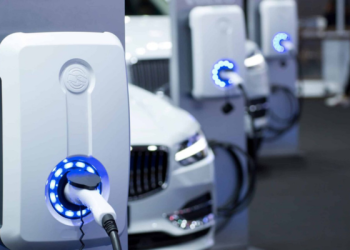
Electric cars can also reduce everyday running costs for some drivers. They usually need less routine maintenance than petrol or diesel cars because they have fewer moving parts and do not require oil changes.
Charging at home can also be cheaper than relying on public chargers. For drivers with solar panels, the savings can be even greater.
But the industrial story is more complicated. Factory deals, production cuts, and Chinese expansion could affect jobs, suppliers, and the future of car manufacturing in Europe.
That is why the reaction online has been sharp. Some viewers of The Electric Viking’s video accused Volkswagen of moving too slowly, with one commenter saying: “VW is going down the drain.”
That may be emotional, but it reflects a real fear. Many car buyers and industry watchers believe the EV transition is moving faster than some traditional manufacturers expected.
Volkswagen is not finished. It remains one of the world’s biggest carmakers, with deep engineering strength and powerful brands.
But the message from the market is clear. In the electric age, size does not guarantee safety.
The next winners will be the companies that combine trusted products with speed, software, affordability, and local manufacturing.
For Volkswagen, the delayed electric Golf is a warning. For Xpeng, Europe may be an opportunity. For drivers, the battle could decide how quickly electric cars become cheaper and easier to own.
Read also: BYD, Xpeng, lead Chinese car brands taking over the global auto market in 2026