Pressure is building inside one of Europe’s most powerful industrial groups as controlling shareholders of Volkswagen push for deeper change following a sharp profit decline tied to major asset write-downs and weak automotive performance.
The holding company Porsche SE, controlled by the Porsche-Piëch family and the largest investor in Volkswagen, reported a 21% drop in adjusted profit after tax to €382 million for the first quarter of 2026.
The result was heavily impacted by a €1.3 billion non-cash writedown on its Volkswagen stake, which pushed its unadjusted result into a €923 million loss.
Volkswagen restructuring under pressure
The figures have intensified scrutiny of Volkswagen restructuring efforts as the carmaker battles weak demand, rising costs, and intensifying competition from China and electric vehicle makers.
Volkswagen is already undergoing a major cost-cutting program, including plans for up to 50,000 job cuts, while also facing pressure over under-utilized plants in Germany. A prior agreement with unions still prevents plant closures until the end of the decade, limiting the group’s flexibility.
Porsche SE board chairman Hans Dieter Poetsch said the current conditions require a fundamental rethink.
“The business models that have served our core investments well for a long time now need to be realigned,” he said, referring to both Volkswagen and Porsche AG.
Porsche SE investment strategy shift
The performance pressure is also reshaping Porsche SE investment portfolio strategy. The holding group is increasingly exploring sectors outside automotive, including defence and artificial intelligence investments, as traditional car holdings face weaker returns.
While still small, these new bets signal a long-term diversification effort. In the first quarter, Porsche SE also generated €60 million from the sale of its stake in semiconductor startup Celestial AI, reflecting its gradual exit from early-stage tech exposure.
Volkswagen stake and shareholder influence
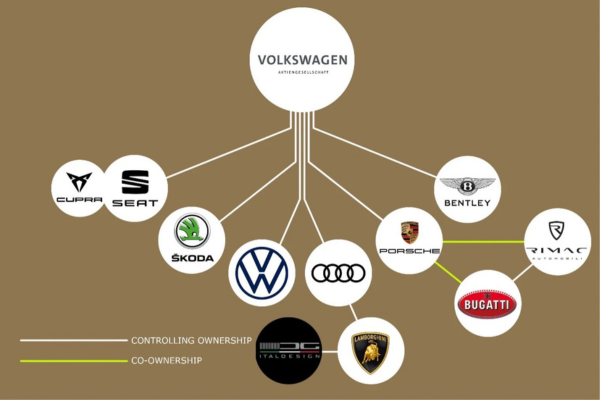
Porsche SE remains deeply tied to Volkswagen, holding 31.9% of shares and 53.3% of voting rights, giving it strong influence over strategy and governance decisions.
Despite this control, the latest results highlight the financial strain of maintaining exposure to a struggling automotive sector during a global transition away from combustion engines.
Industry transition pressure intensifies
Volkswagen CEO Oliver Blume has committed to additional cost reductions beyond existing restructuring measures. However, analysts note that balancing workforce stability, plant efficiency, and EV transformation remains one of the most complex challenges in the European auto industry.
At the same time, rising global tariffs, Chinese EV competition, and uneven demand for electric vehicles continue to weigh on margins across legacy automakers.
For Porsche SE, the message from the latest results is clear: long-standing automotive dominance is no longer guaranteed, and the group’s future may depend on how quickly it adapts beyond cars.
Read also: Volkswagen considers iron dome shift to save 2,300 German jobs