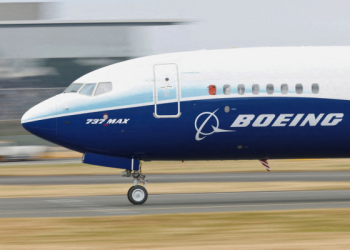
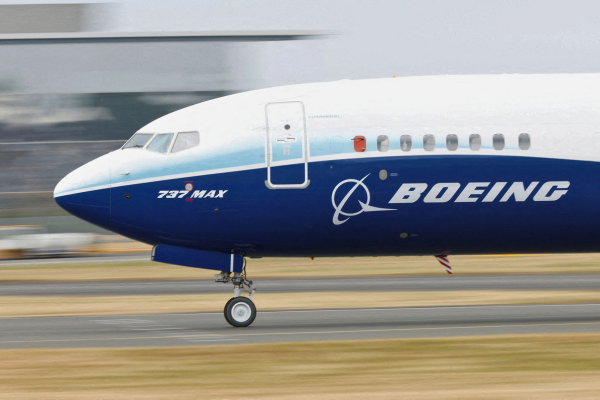
Boeing has drawn a clear line in the sand: its long-delayed 777X jet is now expected to enter service in 2027, marking a seven-year delay that has already cost the company $15 billion and tested confidence in widebody aircraft investment.
The timeline, confirmed in Boeing’s first-quarter 2026 results, signals progress, but also highlights the scale of one of aviation’s most expensive development programs.
FAA Certification Progress Lifts Boeing Stock (BA) Outlook
The company says the aircraft is advancing through FAA certification, with regulators approving the Type Inspection Authorization Phase 4A, an important milestone in flight testing.
Boeing’s test fleet is active. Three of the five aircraft have logged more than 40 flights this month, showing momentum in a program that has faced repeated pauses.
Still, the finish line is not close. Two additional certification phases remain, followed by reliability testing and operational validation before airlines can begin commercial flights.
For investors watching Boeing stock (BA), the update offers cautious optimism but not certainty.
The $15 Billion Problem: Can Aircraft Financing Close the Gap?
Boeing has absorbed around $15 billion in charges on the 777X program. To recover that, the company may need to sell roughly 300 aircraft, based on an estimated $50 million profit per jet.
That puts pressure on aircraft financing markets and aviation leasing firms, which play a key role in helping airlines commit to large fleet purchases.
The risk is simple: if demand slows or pricing weakens, Boeing’s path to profitability becomes longer and more uncertain.
Airline Demand Holds, But Timing Matters
Despite delays, demand for the aircraft remains strong and top customers include:
- Emirates (270 orders)
- Qatar Airways (124)
- Cathay Pacific (35)
- Lufthansa (27)
- British Airways (24)
Lufthansa is expected to be the launch customer in 2027, with other carriers planning deliveries later that year.
For airlines, the 777X offers efficiency gains and a chance to retire older jets like the Airbus A340-600 and Boeing 747-400. But timing is critical. Delays affect fleet planning, maintenance costs, and long-term widebody aircraft investment strategies.
Production Risks Add Pressure to Aviation Leasing Markets
Boeing faces another challenge. It has already built around 26 aircraft, many years before certification is complete. While this could speed up deliveries, it may also create new costs.
Early-built aircraft often require upgrades, modifications, and inspections before they meet final standards. That adds complexity for both Boeing and partners in the aviation leasing ecosystem.
A Program Near the Finish Line But Not There Yet
Boeing insists the program is now on track, with most of 2026 expected to focus on completing certification and validating production aircraft. The direction is positive. But after seven years of delays, the margin for error is thin.
It is a test of whether one of aviation’s most ambitious projects can finally deliver on its promise, and justify the billions already spent.

![Boeing 737 max [Photo Credit BusinessInsider]](https://autojournal.africa/wp-content/uploads/2023/08/Boeing-737-max-Photo-Credit-BusinessInsider-350x250.jpg)