
The United States, home to the first powered flight, still dominates the global commercial aircraft market. At the center of that dominance is Boeing, whose jets now rank among the most expensive machines ever built.
From long-haul passenger planes to ultra-efficient cargo aircraft, Boeing’s most advanced models can cost airlines and governments up to $450 million per plane. The prices reflect rising fuel efficiency demands, complex materials, and engines that push the limits of modern engineering.
All seven of the most expensive commercial jets ever built in the United States rolled off Boeing assembly lines, according to published list prices.
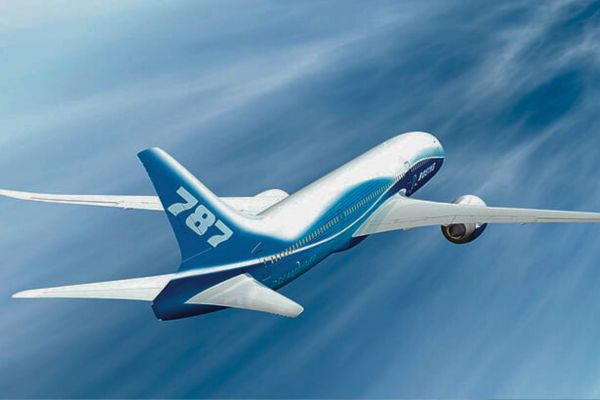
At the lower end of the ranking is the Boeing 787-10 Dreamliner, priced at about $340 million. It is the largest variant of the Dreamliner family and uses a carbon-composite fuselage that cuts fuel use by about 25% compared with older aircraft.
The 787 program cost Boeing tens of billions of dollars, far exceeding early estimates. Carbon-fiber materials, lighter but far more expensive than aluminum, make up half of the aircraft’s structure. Airlines pay a premium for lower fuel burn and reduced passenger fatigue on long routes.
Next is the Boeing 777-200LR, priced around $345 million, though fully customized VIP versions can exceed $400 million. Built in small numbers, the aircraft holds endurance records and can fly nearly halfway around the world nonstop.
It uses GE90 engines, among the most powerful ever made, costing up to $45 million each. Only 61 units were produced, limiting cost savings from mass production. Today, the jet is prized for government and executive travel.
Cargo demand drives the price of the Boeing 777F freighter, listed at $350 million. It can carry 102 tons over nearly 5,000 nautical miles using just two engines, cutting fuel use by roughly 30% compared with four-engine rivals.
Boeing says each 777F sale supports about $440 million in U.S. export trade value, underscoring its economic role beyond aviation.
The Boeing 777-300ER, priced at $375 million, became one of the most successful long-haul aircraft ever built. With a 99.5% dispatch reliability rate, it helped airlines replace older four-engine jets like the 747.
More than 830 units were delivered before production ended in late 2024. Its large capacity, long range, and lower fuel costs made it a mainstay of global fleets.
Higher still is the Boeing 747-8 Intercontinental, with a final list price near $420 million. Though airlines often paid steep discounts, the jumbo jet’s scale and complexity made it costly to build.
Only 155 passenger versions were produced. Cargo demand kept the 747 line alive until 2023, and modified versions still serve as Air Force One and key logistics aircraft.
The two most expensive jets ever built reflect Boeing’s future.
The Boeing 777-8X, priced at $440 million, is designed for ultra-long-haul travel. It can fly nearly 8,745 nautical miles, connecting distant cities with lower passenger demand.
Its GE9X engines are the largest ever made, using ceramic composite materials and record-breaking thrust. Folding wingtips and composite wings add further cost but improve efficiency.
At the top is the Boeing 777-9X, with a list price of $450 million. It is the longest passenger jet in history and Boeing’s new flagship aircraft.
The 777X program has faced years of delays and strict certification reviews following the 737 MAX crisis. Development costs rose from an estimated $5 billion to more than $20 billion, with Boeing paying up to $16 billion in penalties to customers.
Read more on US awards Boeing $8.6bn contract to supply F-15 jets to Israel














![Moove [Photo Credit Niairametrics]](https://autojournal.africa/wp-content/uploads/2023/08/Moove-Photo-Credit-Niairametrics-120x86.jpg)