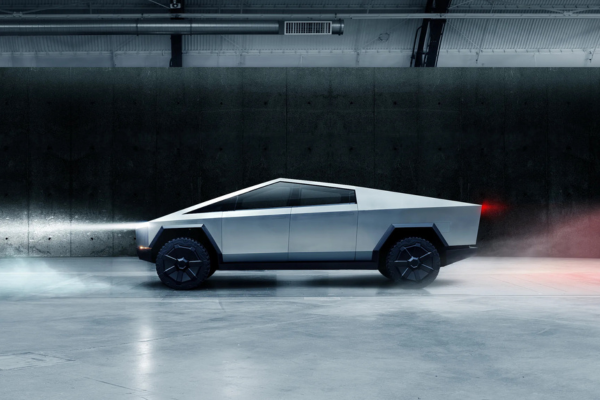
Tesla has cancelled plans to bring its Cybertruck electric pickup to Australia and New Zealand, ending years of uncertainty for customers who have waited since 2019.
The US electric vehicle manufacturer will cancel outstanding reservations and refund customers who paid to secure the vehicle. It is also offering affected buyers a complimentary one-year subscription to its Full Self-Driving (Supervised) software if they order a new Model 3 or Model Y.
The decision closes the door on a long-anticipated launch in two markets where vehicles are driven on the left side of the road. Customers hoping to own Tesla’s distinctive electric pickup will now have to consider alternatives.
Tesla confirms cancellation after years of waiting
Tesla began accepting Cybertruck reservations in November 2019, when it unveiled the unconventional electric pickup. Australian customers reportedly paid deposits of A$150 to reserve a vehicle, although the company never confirmed a delivery date for their market.
On 23 October 2026, reservation holders began receiving emails informing them that their orders would be cancelled.
“After careful consideration, plans to produce Cybertruck for Australia and New Zealand have been discontinued,” Tesla told customers in the email, according to automotive news reports.
The company said it could no longer fulfil the reservations and would return payments in full. Customers must confirm the necessary refund details, after which the money is expected to be returned within 30 days.
For some customers, the announcement ends nearly seven years of waiting for a vehicle that generated considerable excitement when it was first revealed.
Why Tesla has abandoned the two markets
The Cybertruck’s cancellation highlights the technical and financial challenges of introducing vehicles into markets with different driving requirements.
Tesla currently produces the Cybertruck in left-hand-drive form. Australia and New Zealand require right-hand-drive vehicles for normal local sales, meaning Tesla would have needed to develop and manufacture a suitable version.
The company would also have faced vehicle approval requirements, including Australia’s design and safety standards. Meeting these requirements could have required additional engineering, testing and production investment.
Tesla has not publicly provided a detailed explanation for its decision. However, the cost of adapting the vehicle, combined with uncertainty over demand, may have influenced the business case.
The challenge is significant because the Cybertruck was designed primarily for the North American market. Developing a separate version for two additional countries would require investment that Tesla might struggle to justify without sufficient sales.
Warning signs appeared years ago
Doubts about the Cybertruck’s arrival in Australia had been growing for several years.
In May 2022, Tesla removed the Australian reservation page from its website and replaced it with an option for customers to receive updates. The move raised questions about the launch, but the company did not immediately cancel existing reservations or refund customers.
Hope returned in 2024, when Tesla brought a Cybertruck to Australia for a promotional display tour.
Chief executive Elon Musk also suggested that the company might be able to certify the vehicle for other markets the following year. However, a right-hand-drive production version never materialised.
The cancellation now confirms that the earlier expectations will not lead to a commercial launch in Australia or New Zealand.
Tesla offers customers a different electric vehicle
Although Tesla is cancelling the reservations, it is attempting to retain the affected customers within its vehicle range.
The company is offering eligible reservation holders a complimentary 12-month subscription to Full Self-Driving (Supervised) if they order a new Model 3 or Model Y.
Both models are already available in right-hand-drive configurations, making them easier for Tesla to supply to Australia and New Zealand.
However, the offer is conditional. Customers must order one of the specified vehicles to receive the software subscription, so it is not a direct replacement for the cancelled Cybertruck.
Full Self-Driving (Supervised) is a driver-assistance system, not a guarantee of autonomous operation. Drivers must remain attentive and responsible for the vehicle at all times, in accordance with local laws and the system’s operating requirements.
For customers who reserved the pickup specifically because of its design, size or utility, the alternative may offer limited consolation.
Cybertruck faces wider commercial questions
The decision comes as Tesla faces questions about demand for the Cybertruck beyond its initial launch markets.
The vehicle attracted considerable attention because of its angular bodywork, stainless-steel exterior and all-electric powertrain. However, early excitement has not translated into the level of sustained demand that would automatically justify expansion into every international market.
Tesla reported 8,295 deliveries in its ‘Other Models’ category in the third quarter of 2026, according to figures cited by Electrek. The category largely represents the Cybertruck following the end of Model S and Model X production, although it is not a standalone Cybertruck sales figure.
Electrek estimated that Cybertruck deliveries accounted for approximately 7,000 to 8,000 vehicles during the quarter. This suggests an annualised pace of roughly 28,000 to 32,000 vehicles if the rate continued, although quarterly results can fluctuate.
The figures provide context for the challenge of investing in additional production configurations. A manufacturer must weigh the expected number of buyers against engineering costs, certification requirements and the expense of supporting another version of a vehicle.
Tesla’s decision does not mean the Cybertruck is being discontinued globally. The company continues to sell the pickup in selected markets where its existing left-hand-drive configuration can be offered.
What the decision means for the UK
The cancellation also raises questions for prospective buyers in the United Kingdom, another right-hand-drive market.
Tesla has not announced a Cybertruck production programme for the UK. The latest decision in Australia and New Zealand provides further evidence that a right-hand-drive version cannot be assumed to arrive in other markets.
A UK launch would require Tesla to address vehicle configuration, regulatory compliance and commercial viability. The Australian and New Zealand decision does not, by itself, establish the company’s future plans for Britain.
For British electric pickup buyers, the practical message is to avoid treating the Cybertruck as an upcoming local option until Tesla announces a confirmed launch.
A disappointing end for early supporters
For customers who placed reservations in 2019, the cancellation represents more than a change in Tesla’s product plans. It brings years of anticipation to an end without the vehicle they expected to buy.
The refunds will return their reservation payments, while the software offer gives some customers an incentive to consider another Tesla.
However, the episode also highlights the risks of reserving a vehicle long before production, local approval and delivery arrangements are confirmed.
For Tesla, the decision may help avoid the cost of developing a specialised pickup for markets where demand remains uncertain. For its early supporters, it is a reminder that even a highly publicised vehicle can fail to reach the showroom.
The Cybertruck’s future in Australia and New Zealand is now settled: reservations are being cancelled, refunds are due, and customers must look elsewhere if they still want an electric pickup.