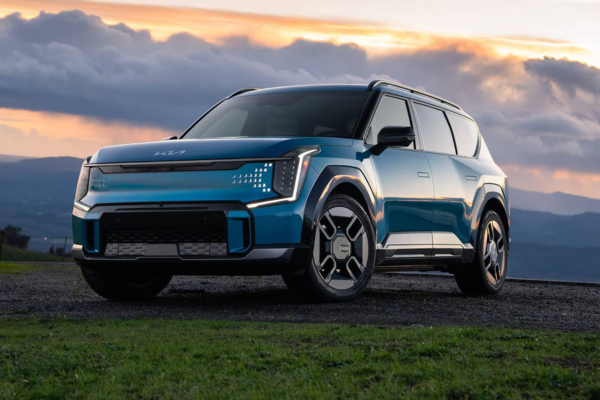
An American SUV owner estimates that switching to a fully electric Kia EV9 could save about $7,000 annually, highlighting how rising fuel costs are influencing vehicle purchasing decisions.
The driver reported saving more than $200 on petrol within two weeks of making the switch. The decision followed years of family discussions about moving from a conventional petrol vehicle to an electric alternative.
According to a post shared on Reddit’s electric vehicle forum, the Kia EV9 replaced an ageing SUV powered by a six-cylinder petrol engine. The owner described the change as a straightforward replacement for a vehicle that had become increasingly expensive to run.
Rising petrol prices ultimately helped settle the decision. The driver said local petrol prices were about $3.85 per US gallon, below the reported national average of $4.31.
Despite paying less than the national average, the owner faced substantial fuel expenses because of frequent long-distance journeys.
Frequent journeys pushed fuel bills above $500 a month
The driver said they travelled approximately 40 miles from a smaller city to a larger urban centre several times a week.
Their previous SUV averaged around 20 miles per US gallon and had an 18-gallon fuel tank. The combination of relatively poor fuel economy and regular commuting meant filling the tank approximately twice a week.
As a result, monthly petrol spending exceeded $500.
For motorists covering similar distances, fuel consumption can significantly influence the overall cost of vehicle ownership. Drivers with larger petrol-powered SUVs may be particularly exposed when prices rise.
The owner also considered the cost of routine servicing and repairs, including oil changes, drive belt replacements and brake work.
These expenses formed part of the financial calculation behind the switch to the Kia EV9, which uses an electric drivetrain instead of a conventional combustion engine.
Home charging could improve the financial case
The driver estimates that replacing the petrol SUV with the electric Kia could deliver annual savings of approximately $7,000 after accounting for vehicle expenses.
However, the calculation includes an important qualification: the electric vehicle’s monthly payments were slightly higher than those of the previous vehicle.
The owner also invested $2,000 in installing a home charging system.
Despite these additional costs, the driver expects the lower running costs to outweigh the difference over time.
The owner estimated that the home charger installation could pay for itself within four months. That projection depends on actual charging costs, driving distances and how much petrol spending the installation helps eliminate.
Home charging can offer convenience and potentially lower running costs, particularly for motorists who drive frequently. However, savings vary according to electricity tariffs, vehicle efficiency, petrol prices and charging arrangements.
Drivers who rely on public charging may face a different financial picture from those who can charge at home.
Quieter journeys and smoother driving add to the appeal
The financial benefits were not the only reasons the owner welcomed the change.
The driver described the Kia EV9 as quiet, comfortable and enjoyable to drive, highlighting qualities that can improve everyday commuting.
Other electric vehicle owners responding to the Reddit discussion also praised the quieter cabins of electric cars, particularly during journeys lasting more than two hours.
Electric vehicles generally produce less powertrain noise than comparable petrol or diesel vehicles. They also deliver electric motor torque directly, providing smooth acceleration without conventional gear changes in most models.
For drivers spending hours behind the wheel, these characteristics can make a noticeable difference to the daily driving experience.
One commenter also described replacing a 2011 Acura MDX with a new Kia EV9 after petrol prices reached $6 per gallon.
The owner said the electric vehicle offered a better overall driving experience while reducing dependence on petrol.
These accounts illustrate how running costs, comfort and environmental considerations can combine to influence purchasing decisions.
Solar power could deliver additional benefits
Some owners are also exploring ways to combine electric vehicles with renewable energy.
One participant in the discussion said installing solar panels alongside a Level 2 home charger had increased their household’s energy independence.
A Level 2 charger uses a higher-power electrical supply than a standard household outlet, generally allowing a vehicle to recharge more quickly.
When paired with solar generation, home charging can potentially reduce reliance on grid electricity. The financial benefits, however, depend on installation costs, local electricity tariffs, solar output and when the vehicle is charged.
Solar panels and home batteries may also provide some protection against electricity interruptions when the system is specifically configured to supply backup power.
However, a standard grid-connected solar installation will not necessarily keep a home powered during an outage.
For some households, the attraction of electric mobility therefore extends beyond fuel savings to include greater control over how and when energy is purchased.
Electric vehicles do not guarantee savings for every driver
Although the Kia EV9 owner’s experience demonstrates the potential financial advantages of electric driving, the same calculation will not apply to every household.
One participant in the discussion explained that switching was less financially attractive in their circumstances.
Their existing petrol sedan achieved approximately 25 miles per gallon, while apartment charging cost $0.25 per kilowatt-hour. Additional vehicle ownership taxes also affected the cost of buying a new car.
The difference is important because a relatively fuel-efficient petrol vehicle may cost considerably less to operate than a large SUV.
Drivers who cannot charge at home may also pay more for electricity, depending on their local charging network and tariffs.
The original poster acknowledged these differences, saying the economics did not always work for everyone but were worthwhile in their own case.
Before purchasing an electric vehicle, motorists should compare their existing fuel expenditure with estimated electricity costs. They should also account for insurance, financing, servicing, tyres, taxes and charging equipment.
The vehicle’s purchase price and expected resale value are equally important when calculating the total cost of ownership.
What should drivers consider before switching?
For motorists facing rising fuel prices, the Kia EV9 owner’s experience offers a practical starting point for evaluating electric vehicle ownership.
The first step is to calculate how much the current vehicle costs to fuel each month. Drivers should then estimate electricity consumption based on their annual mileage and the electric vehicle’s expected efficiency.
The next step is to compare home and public charging costs. Anyone considering home charging should obtain installation quotes and check whether their property and electricity supply can accommodate the equipment.
Maintenance records also deserve attention. An ageing petrol SUV with frequent repair bills may present a different financial proposition from a well-maintained, fuel-efficient car.
Finally, buyers should compare the full cost of ownership rather than focusing exclusively on fuel savings.
For the Kia EV9 owner, the decision appears to have delivered more than an anticipated reduction in running costs.
The driver described the vehicle as quiet, comfortable and enjoyable, concluding that it had been the right choice.
The experience highlights a growing consideration for motorists: when fuel bills become a major household expense, switching to electric driving may offer both financial relief and a more comfortable daily journey.
However, the strongest case for making the switch comes from understanding individual driving habits, charging options and the full cost of ownership before committing to a purchase.
Read also: Volkswagen’s Xpeng EV bet misses China sales target by 93% as local rivals surge