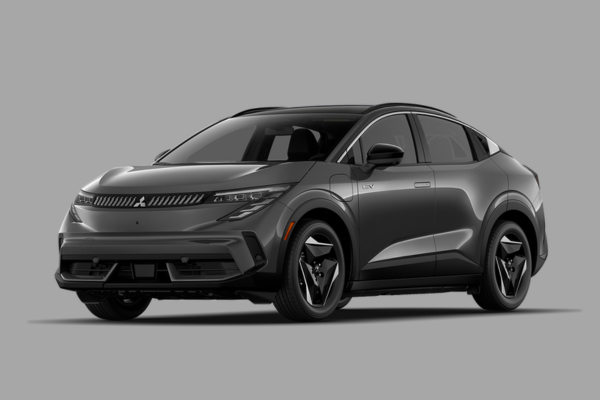
Mitsubishi has announced pricing for its 2027 Eclipse Sportback electric crossover, offering buyers premium features, a 282-mile driving range and access to Tesla’s Supercharger network. However, its higher price raises questions about whether customers are getting enough value compared with the Nissan Leaf.
The new electric vehicle starts at $37,745 in the United States, excluding a $1,995 destination and delivery charge. This brings the minimum purchase price to $39,740 before taxes, registration and optional equipment.
By comparison, the related 2026 Nissan Leaf starts at $29,990, with an additional $1,575 delivery fee. Its total entry price is $31,565, making the Mitsubishi $8,175 more expensive when both delivery charges are included.
The price difference could influence buyers seeking affordable electric mobility, particularly as competition intensifies across the global EV market.
Higher price, but what do buyers get?
The 2027 Mitsubishi Eclipse Sportback shares its underlying engineering with the Nissan Leaf, although Mitsubishi is positioning its model as a more premium alternative.
Both vehicles use closely related electric technology, but Mitsubishi has introduced exterior styling changes and additional comfort features. These include redesigned bumpers, a distinctive front grille, LED lighting and exclusive 18-inch alloy wheels.
The Eclipse Sportback also features flush-mounted door handles and black synthetic leather upholstery. Heated seats for both front and rear passengers add comfort, particularly during colder months.
Unlike vehicles offered in several equipment grades, Mitsubishi’s new crossover will initially be available in a single trim. This simplifies the buying process but gives customers fewer opportunities to choose a lower-priced specification.
Battery performance and driving range
Under the bodywork, the Eclipse Sportback features a 75-kilowatt-hour battery pack and a single electric motor.
The motor produces 214 horsepower and 261 pound-feet of torque, equivalent to approximately 354 Newton-metres. Mitsubishi estimates the vehicle can travel up to 282 miles, or 454 kilometres, on a full charge.
For drivers, that could provide enough range for several days of commuting without needing to recharge. Actual driving distance will depend on temperature, speed, terrain and driving habits.
However, the Mitsubishi’s estimated range is below the Nissan Leaf’s maximum advertised figure of 303 miles. That represents a difference of 21 miles, or approximately 34 kilometres.
The comparison suggests buyers are paying primarily for additional equipment and styling rather than a longer driving range. It also places greater importance on the Mitsubishi’s interior comfort and ownership experience.
Fast charging and Tesla Supercharger access
One of the Eclipse Sportback’s most useful features is its ability to connect to Tesla’s Supercharger network.
Mitsubishi has equipped the crossover with two charging connections, designed to support different charging requirements. Its CCS-type connection supports slower AC charging, while the North American Charging Standard connector handles DC fast charging.
The NACS charging port is positioned near the front passenger side of the vehicle. This arrangement should make compatible Tesla Superchargers accessible without requiring a separate charging adapter.
Mitsubishi says the vehicle supports DC fast charging at up to 150 kilowatts. Under suitable conditions, the battery can recharge from 10% to 80% in approximately 35 minutes.
That means drivers could add a substantial amount of range during a meal break or a short motorway stop. Charging times will still depend on battery temperature, charger performance and other operating conditions.
For buyers concerned about public charging availability, access to a wider network could make electric vehicle ownership more practical.
Modern interior with twin digital displays
Inside, the Eclipse Sportback adopts much of the Nissan Leaf’s cabin architecture, including its dashboard arrangement and digital technology.
Drivers receive two 14.3-inch screens, creating a combined display area measuring 28.6 inches diagonally across the separate panels. One screen presents driving information, while the other controls infotainment and connected vehicle functions.
A standard six-speaker sound system provides entertainment, while the synthetic leather seats contribute to the vehicle’s premium appearance.
Although Mitsubishi has introduced its own branding, the cabin remains closely related to the Leaf. This shared design could make it difficult for some customers to justify the price difference.
Nevertheless, buyers who value heated rear seats and a more generously equipped standard specification may find the Mitsubishi appealing.
Optional Technology Package adds $2,600
Customers looking for additional luxury can select Mitsubishi’s Technology Package, priced at $2,600.
The package includes a 10-speaker Bose audio system, replacing the standard six-speaker arrangement. It also adds roof rails and a hands-free powered tailgate for easier access to the luggage compartment.
Another notable feature is a panoramic glass roof that can change from transparent to opaque at the touch of a button. This allows occupants to control incoming sunlight without relying on a conventional sunshade.
Adding the Technology Package increases the vehicle’s starting price to $40,345 before destination charges. Including the $1,995 delivery fee brings the total to $42,340, excluding taxes and registration.
At this price, the Eclipse Sportback faces greater pressure to demonstrate its value against other electric crossovers.
Mitsubishi’s partnership with Nissan
The Eclipse Sportback reflects the growing importance of collaboration among automotive manufacturers as they invest in electric mobility.
Developing dedicated EV platforms, batteries and software requires significant investment. Sharing technology can help manufacturers reduce development costs and introduce new models more quickly.
For Mitsubishi, using Nissan’s existing electric vehicle architecture offers a route into the market without developing every major component independently.
However, the approach also creates a challenge. Customers can compare closely related vehicles and question why one carries a significantly higher price.
Mitsubishi’s strategy therefore depends on convincing buyers that additional comfort, equipment and brand appeal justify the premium.
What this means for electric vehicle buyers
The Eclipse Sportback enters a market where consumers increasingly consider purchase price, battery range and charging convenience before choosing an EV.
Its 282-mile estimated range and access to compatible Tesla Superchargers provide practical benefits for everyday driving. The heated seats, digital displays and optional premium audio system also strengthen its appeal.
Yet the Nissan Leaf offers a lower entry price and a higher maximum advertised driving range. For cost-conscious buyers, that difference may prove difficult to overlook.
The Eclipse Sportback could still attract drivers seeking a more generously equipped electric crossover without moving into a larger vehicle category.
Ultimately, Mitsubishi will need to demonstrate that its additional features deliver meaningful everyday benefits, rather than simply a more expensive version of familiar technology.
For consumers, the central question is straightforward: is improved comfort and equipment worth paying more than $8,000 extra for a closely related electric vehicle?
Read also: Mistubishi: Top three fuel efficient vehicles in 2023





![Tesla [Reuters]](https://autojournal.africa/wp-content/uploads/2026/04/Tesla-Reuters-120x86.png)