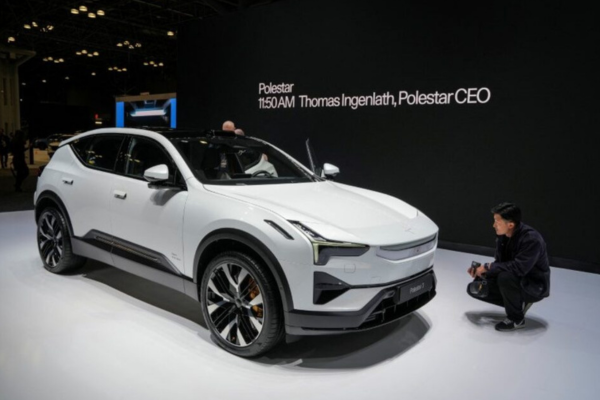
American buyers have a shrinking window to purchase new Polestar electric vehicles as the Swedish automaker moves to sell its remaining 2026 models before a US ban takes effect.
Polestar is close to selling out its remaining model-year 2026 cars in the United States, Chief Executive Michael Lohscheller told Reuters on Thursday. The company faces restrictions that will prevent it from selling new vehicles in the country from model year 2027.
The deadline comes as electric vehicle sales in the US have become a key driver of Polestar’s latest results, even as demand in other markets weakens.
The company recorded global sales volume of 14,371 units in the third quarter, up 1% from 14,222 in the same period last year.
Polestar US sales more than double
Polestar sold about 2,160 vehicles in the US during the quarter, compared with 966 a year earlier.
The increase came as customers bought the last available vehicles from the 2026 model year.
US sales were strong because “we are now selling the last model year 26 cars,” Lohscheller said.
However, the rise may be difficult to sustain once the remaining stock is sold. The company will not be allowed to sell new vehicles in the US from model year 2027 under US Commerce Department rules targeting China-linked vehicles with connected-car technology.
The restrictions place automotive market access at the centre of Polestar’s business challenge. The company is majority-owned by China’s Geely Holding.
Polestar is continuing to sell existing Polestar 3 and Polestar 4 inventory in the US. It also plans to maintain its service network and used-car business, giving existing owners continued access to these services.
Electric vehicle growth faces pressure outside the US
Despite the increase in US sales, Polestar’s wider performance remains under pressure.
Retail sales outside the US fell 8% in the third quarter, showing that the rise in American demand did not reflect a broad increase across its markets.
In September, Polestar cut its full-year volume growth guidance and said it expected stronger competition to continue.
The challenges also extend to its sister brand, Volvo Cars. The company withdrew its full-year volume guidance last week after reporting a 40% drop in retail sales in China.
The developments point to the pressure facing automakers as they compete for customers across major markets while adjusting to changing trade rules and demand.
For Polestar, the US restrictions add another challenge as it seeks to build sales in Europe.
## Polestar shifts focus to European electric vehicle market
The company has turned its attention towards Europe, where it expects new models to support future sales.
Polestar plans to produce its compact SUV, the Polestar 7, at Volvo’s factory in Slovakia.
Customer deliveries of the Polestar 5 have begun, while Polestar 4 SUVs have arrived at European ports and are being distributed to retailers, Lohscheller said.
Although European sales were weaker in the third quarter, the chief executive expects them to improve as new models reach buyers.
He said the Polestar 5 was attracting strong interest in the United Kingdom, with Germany and Scandinavia also showing demand.
The shift makes **European electric vehicle sales** increasingly important to Polestar’s growth plans as its US new-car business approaches a major limit.
However, the company’s latest figures show that growth remains uneven across markets. Higher US sales have helped lift total volume, but weaker retail sales elsewhere and continued competition remain concerns.
Polestar earnings report due November 5
Investors will get a closer look at the company’s financial performance when Polestar is expected to report its third-quarter results on November 5.
The results may provide further insight into how the company is managing its market shift, although the sales figures alone do not show its profitability or the financial effect of the US restrictions.
For US buyers, the immediate issue is the remaining supply of new 2026 vehicles. For Polestar, the larger challenge is whether its European strategy and new models can support growth as its access to the US new-car market narrows.
Read also: Polestar owners fear resale losses after US sales setback