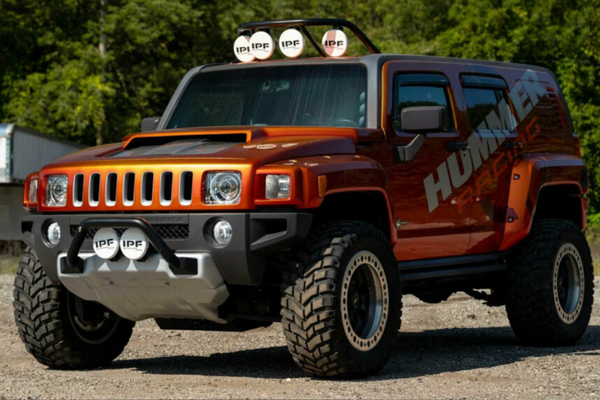
For years, the Hummer was more than an SUV. It was a statement about wealth, power and American automotive scale. But by February 2010, that image had become a major business problem for General Motors.
On Feb. 24, 2010, GM announced that it would wind down the Hummer brand after a failed attempt to sell it to Chinese machinery maker Sichuan Tengzhong Heavy Industrial Machinery.
The collapse showed how quickly consumer demand, fuel prices, regulation and changing cultural attitudes can destroy a once-successful automotive brand.
From Military Vehicle to Luxury SUV
The Hummer began as the High Mobility Multipurpose Wheeled Vehicle, or Humvee, developed by AM General for the U.S. Army.
Its move into the civilian market came in 1992, helped in large part by Arnold Schwarzenegger, who pushed for a street-legal version.
GM later bought the brand rights in 1999. It launched the Hummer H2 in 2002 and the smaller H3 in 2005.
The strategy worked for several years. Cheap fuel and a strong real estate market helped drive demand, while the vehicle’s military appearance gave it a powerful identity.
Hummer sales reached a peak of more than 70,000 units globally in 2006. But the same features that made the brand attractive also created its biggest weakness.
Hummer and the Rise of Fuel-Efficiency Concerns
The Hummer’s huge size and poor fuel economy became increasingly difficult to defend as environmental concerns grew. The H1 struggled to reach 10 miles per gallon, while the H3 managed only about 14 mpg in city driving.
Environmental activists targeted Hummer dealerships, including protests involving spray-painted vehicles. At the same time, rival automakers were investing in fuel management, hybrid technology and crossover platforms.
GM, according to the supplied material, continued to rely heavily on Hummer’s familiar boxy design.
The brand was increasingly out of step with a market moving toward fuel efficiency, lower emissions and changing consumer attitudes.
2008 Financial Crisis Triggers Demand Collapse
The biggest shock came in 2008.
The global financial crisis caused the subprime mortgage bubble to collapse and luxury credit markets to freeze. At the same time, crude oil prices surged and U.S. gasoline prices moved above $4 per gallon.
For a vehicle built around size and high fuel consumption, the combination was devastating.
Hummer sales fell to about 9,000 units annually by 2009.
The brand’s low sales volume had previously been supported by large profit margins. Once demand collapsed, those economics no longer worked.
Hummer had moved from being a valuable brand to becoming a liability for GM.
GM Bankruptcy Forces Corporate Restructuring
Hummer’s problems were also part of a much larger crisis at GM. By 2009, GM faced insolvency and entered a federally backed Chapter 11 bankruptcy process.
The reorganized company, known as “New GM”, moved to reduce its corporate structure and focus on Chevrolet, Cadillac, GMC and Buick.
Pontiac was retired, Saturn was phased out and Saab was sold. Hummer was put up for sale.
$150 Million Deal Fails in China
GM found a potential buyer in Sichuan Tengzhong Heavy Industrial Machinery.
The proposed transaction would have given Tengzhong an 80% controlling stake in Hummer for a reported $150 million.
But the deal faced regulatory problems. Chinese ministries did not approve the transaction, as the country’s industrial policy was shifting toward more fuel-efficient vehicles and early-stage electrification.
The approval deadline expired, and Tengzhong walked away on Feb. 24, 2010.
With no backup buyer, GM began winding down Hummer.
The closure threatened about 3,000 industrial jobs and affected 153 domestic U.S. dealerships.
The Business Lesson From Hummer
Hummer’s collapse is a warning about business strategy and over-specialization. The brand was highly successful in an era defined by cheap credit, cheap fuel and conspicuous consumer spending. When those conditions changed, the product had little room to adapt.
The Hummer name would later return under GMC as a high-powered electric vehicle. But the original standalone Hummer business had already demonstrated a critical lesson: a powerful brand can still fail when its product, economics and market environment move in different directions.
Read also: What went wrong at Nikola? How an American EV truck dream collapsed