
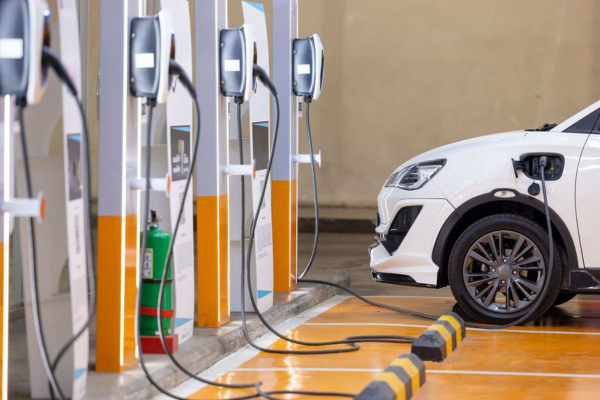
A US woman living in Dubai has shared how her family used 3,000 kWh of electricity in one month while driving two electric vehicles (EVs) in extreme desert heat, yet paid only about $265 for the entire household.
Jamilia Grier, an American lawyer living in Dubai, examined her household’s energy costs after her family added two Nio EC6 electric SUVs.
The family drove about 4,500 km, or 2,800 miles, during the month. Six people were staying in the villa, while air conditioning operated around the clock as temperatures reached about 45°C (113°F).
Dubai Electricity Rates Cut EV Charging Costs
Despite the heavy electricity consumption, the villa used exactly 3,000 kWh and received a bill of 970 dirhams, or about $265.
Grier estimated that the two EVs consumed about 865 kWh based on their mileage and estimated efficiency of 19 kWh per 100 km.
About 125 kWh came from free public charging, leaving roughly 740 kWh that was charged at home.
She estimated that charging both vehicles cost about $80, meaning the EVs represented about 27% of the household’s electricity use.
The remaining 73% was attributed to running the villa.
Dubai also provides free AC charging at some malls, hotels, souks and other destinations, according to Grier, further reducing the family’s EV charging costs.
US Electricity Prices Show a Different Picture
The biggest difference emerged when Grier compared the 3,000 kWh consumption with US electricity costs.
She estimated that the same usage in Phoenix, Arizona, would produce a bill of just under $500. In New York, she estimated the bill would be around $900.
Grier put the average US residential electricity rate at about 18.12 cents per kWh. Dubai’s household rate, including additional charges, worked out to about 9.7 cents per kWh.
Dubai’s public charging rate was capped at around 19 cents per kWh, roughly matching the average US residential electricity rate cited by Grier.
EVs Versus Gasoline Costs
The comparison also extended to gasoline costs.
A gasoline SUV averaging 21 mpg would require about 135 gallons to travel the same 2,800 miles. At $4 per gallon, that would cost about $550.
By comparison, the two EVs used roughly $80 in electricity for the same distance.
Grier’s point was not that her family consumes less electricity. She believes they may use considerably more because of Dubai’s extreme heat and constant air conditioning.
Instead, the comparison highlights how electricity rates can have a major impact on household energy costs.
Read also: BYD targets Japan’s electric vehicle market with low-cost mini EV













![Toyota RAV 4 [Reuters]](https://autojournal.africa/wp-content/uploads/2026/04/Toyota-RAV-4-Reuters-120x86.png)