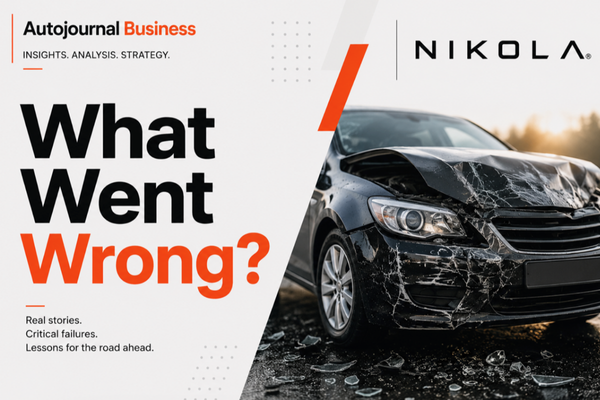
The collapse of Nikola offers a powerful lesson for investors, businesses and the global automotive industry. Once valued at more than $30 billion, the American electric and hydrogen truck manufacturer promised to transform freight transport. Instead, it became one of the biggest corporate failures in the history of the electric vehicle sector.
Nikola filed for Chapter 11 bankruptcy protection in February 2025, bringing years of financial struggles and controversy to a dramatic end. The company, which once attracted billions of dollars in investment and became one of Wall Street’s fastest-rising EV companies, failed to build a profitable business despite growing demand for cleaner commercial vehicles.
Founded in 2014, Nikola set out to challenge diesel-powered trucking by developing battery-electric and hydrogen fuel-cell trucks. Investors quickly embraced its ambitious vision. The company’s stock market debut in June 2020 briefly pushed its market value above $30 billion, making it worth more than established automakers such as Ford despite having delivered very few vehicles.
Excitement soon turned into concern. In September 2020, short-selling research firm Hindenburg Research accused Nikola of misleading investors about its technology and product capabilities. Among the claims was that a promotional video showing one of Nikola’s trucks driving under its own power had actually been filmed with the vehicle rolling downhill.
The allegations triggered investigations by US regulators and severely damaged investor confidence. Nikola founder Trevor Milton resigned shortly afterwards. In 2022, he was convicted of fraud for misleading investors about the company’s technology and business prospects, further tarnishing Nikola’s reputation.
Although the company continued developing battery-electric and hydrogen-powered trucks under new leadership, rebuilding trust proved difficult. Production remained limited while operating costs stayed high. Like many EV startups, Nikola struggled with supply chain disruptions, rising interest rates, inflation and slower-than-expected customer adoption of zero-emission commercial vehicles.
The hydrogen business also faced significant obstacles. Building a nationwide hydrogen refuelling network required billions of dollars in investment. Limited infrastructure made fleet operators hesitant to switch from diesel, creating a cycle that slowed both vehicle sales and hydrogen station development.
Financial pressure continued to mount. Nikola reported hundreds of millions of dollars in annual losses while repeatedly raising capital to stay afloat. Cash reserves declined as revenues failed to match growing operating expenses. Vehicle recalls, including those linked to battery fires, added further costs and weakened customer confidence.
By early 2025, the company concluded it could no longer continue operating under its existing financial structure. Filing for Chapter 11 bankruptcy allowed Nikola to seek court protection while exploring options to sell its assets and maximise value for creditors.
Nikola’s downfall highlights the growing divide between bold innovation and commercial reality. While electric mobility continues to expand globally, investors have become more cautious about companies that rely on future promises instead of sustainable revenues. Several EV startups that attracted billions during the pandemic-era investment boom have since struggled with weak demand, funding shortages and mounting losses.
Despite Nikola’s collapse, the transition towards cleaner commercial transport continues. Established truck manufacturers and well-funded competitors remain committed to battery-electric and hydrogen technologies, supported by stronger balance sheets, larger manufacturing capacity and established customer networks.
Nikola’s story will be remembered as one of the most dramatic rises and falls in automotive history. It serves as a reminder that breakthrough technology alone is not enough. Long-term success depends on execution, financial discipline, customer trust and the ability to turn innovation into a profitable business.
Read also: What Went Wrong? How Canoo, a billion-dollar EV startup ran out of road