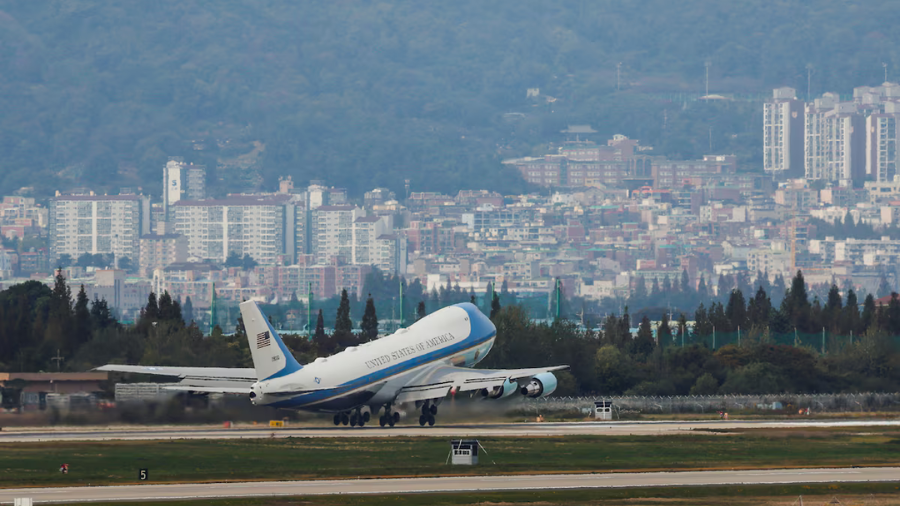
The U.S. Air Force announced on Friday that the first of two new Air Force One jets from Boeing Co (BA.N) will not be delivered until mid-2028, marking another year-long delay in a program already four years behind schedule.
The latest setback comes as President Donald Trump expressed his desire to fly in the new planes before his term ends in January 2029. The delays could further frustrate the President, who has publicly criticized Boeing over prior schedule slips.
The current effort to convert two Boeing 747-8 aircraft into fully equipped presidential jets now exceeds $5 billion in costs. The original Air Force One airplanes have been in service since 1990. Boeing received a $3.9 billion contract in 2018 to build the planes, though expenses have risen, and the company has posted $2.4 billion in charges against earnings related to the project.
The Air Force One program involves outfitting the 747-8s with advanced communications, defense systems, and security upgrades suitable for presidential transport. Boeing said in a statement: “Our focus is on delivering two exceptional Air Force One airplanes for the country.”
Earlier this year, the United States accepted a luxury Boeing 747 as a gift from Qatar. The White House requested that the Air Force quickly upgrade the gifted jet for presidential use, with defense contractor L3Harris Technologies (LHX.N) tasked with the overhaul.
Trump ruled out European rival Airbus (AIR.PA) as an alternative, despite expressing displeasure with Boeing’s delays. Boeing CEO Kelly Ortberg previously noted that Elon Musk, serving as a Trump adviser, has assisted in navigating the jet’s delivery.
In June, Boeing appointed Steve Sullivan, a former Northrop Grumman (NOC.N) executive who worked on the B-21 bomber program, to lead Air Force One efforts. Sullivan replaced Gregg Coffey, who moved to another role within Boeing.
Boeing and the Air Force have faced repeated delays, complicated by the technical challenges of converting commercial jets into secure, fully functional presidential aircraft. The new jets are expected to enhance safety, communication, and comfort compared to the decades-old planes currently in use.
A U.S. Air Force official, speaking on condition of anonymity, said, “We remain committed to delivering these aircraft with the highest standards. While delays are disappointing, ensuring the aircraft meet security and operational requirements is our priority.”
Industry analysts say the program highlights the difficulties of modernizing highly specialized aircraft under tight schedules and rising costs. Trump’s insistence on having the planes before January 2029 puts additional pressure on Boeing and the Air Force.
The new delivery timeline now coincides with the final year of Trump’s presidency, potentially limiting his ability to use the updated jets extensively before leaving office.
Read more on Trump moves to approve F-35 jets sale to Saudi Arabia