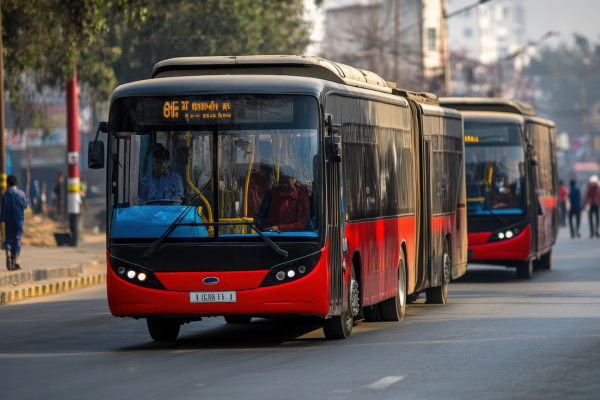
Chinese-made electric buses are rapidly expanding across Southeast Asia as governments race to cut emissions and modernise public transport systems, according to Nikkei Asia and industry data.
Manufacturers such as BYD, Yutong and King Long are increasing exports as cities across Indonesia, Malaysia, Singapore and the Philippines target full or partial electrification of public bus fleets by 2030. The push comes as China’s domestic market slows and overseas demand grows.
In Jakarta, the shift is already visible on city roads. Transjakarta, Indonesia’s largest public bus operator, began deploying Chinese electric buses in 2022. The operator now runs about 420 electric buses, almost 10% of its fleet, using vehicles from BYD, Skywell and Zhongtong.
Transjakarta plans to electrify its entire 10,000-bus fleet by 2030, in line with Indonesia’s national electric vehicle policy aimed at cutting urban pollution and fuel costs.
For veteran driver Muhammad Iqbal, the new buses mark a sharp break from the past. Earlier Chinese models earned a poor reputation in Indonesia due to frequent breakdowns and safety issues, forcing operators to rely on Japanese and European brands.
“The difference is clear,” Iqbal said. “It’s more comfortable to drive this electric bus. It uses an automatic transmission, and drivers don’t have to queue at gas stations at night.”
Chinese manufacturers now dominate the global electric bus export market. Led by Yutong and King Long, China exported about 9,000 electric buses worldwide in the first half of 2025, a 124% increase from the same period a year earlier, according to Nikkei Asia.
Southeast Asia still accounts for a relatively small share of exports, but demand is rising fast as governments introduce incentives, fuel subsidies shrink and climate targets tighten.
In Indonesia, BYD has partnered with local firm VKTR Teknologi Mobilitas to assemble electric buses domestically. The company opened a plant in Central Java in May with capacity to produce 3,000 vehicles a year. It currently assembles about 200 units and plans to deliver 80 buses to Transjakarta by early 2026.
Around 40% of components are sourced locally, qualifying the buses for government incentives designed to build domestic EV supply chains.
Elsewhere in the region, Malaysia operates more than 140 electric buses and plans to deploy thousands over the next five years. Singapore has ordered hundreds of electric buses from Chinese suppliers and aims to electrify half its bus fleet by 2030. The Philippines has set similar targets under its national EV roadmap.
Vietnam and Thailand stand apart. Vietnam’s electric bus market is dominated by local manufacturer VinFast, while Thailand has focused more heavily on rail projects than bus electrification.
Despite strong growth, concerns are emerging over cybersecurity risks. In November, Norway’s public transport operator warned that Chinese-made buses could be vulnerable to remote manipulation, triggering investigations in Europe. Yutong rejected the claims.
Indonesian cybersecurity expert Pratama Persadha warned that vehicle data systems could be exploited if safeguards are weak. He urged governments to require mandatory cyber audits for imported electric vehicles.
“Whoever the company is, there will always be a cybersecurity risk,” said analyst Mark Manantan. “The issue is whether governments are prepared to manage it.”
Read more on Global EV sales slow to 21-month low as China stalls, US incentives end