Nigeria must urgently shift from subsidising fuel consumption to financing vehicle ownership and local automotive production, stakeholders at a Lagos Chamber of Commerce and Industry automotive symposium have said.
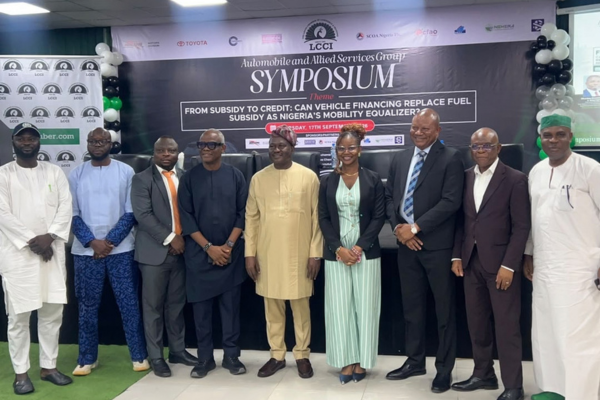
The call was made on Thursday at the LCCI/National Automotive Design and Development Council Automobile Symposium themed, “From Subsidy to Credit: Can Vehicle Financing Replace Fuel Subsidy as Nigeria’s Mobility Equalizer?”
Chairman of the LCCI Auto and Allied Sector Group, Dr Femi Eguaikhide, said affordable vehicle credit could make mobility more accessible, stimulate productivity and create a stronger market for Nigeria’s automotive industry.
He noted that fuel subsidy had for decades effectively served as Nigeria’s mobility policy by keeping transportation relatively affordable for millions of Nigerians, including commercial drivers, teachers and small-business owners.
However, following its removal in May 2023, he said mobility costs had risen sharply, pushing up transport fares and the prices of goods and services while affecting productivity.
“Subsidy made fuel cheap, but cars remained expensive. So only the rich owned productive assets,” Eguaikhide said, arguing that credit could enable Nigerians to acquire vehicles and repay loans from income generated by those assets.
He called for affordable, preferably single-digit interest rates and longer-tenor lease-to-own schemes for commercial operators using buses, tricycles and motorcycles.
“Can we create a ₦50,000/month plan for a keke driver?” he asked, urging financial institutions to design products around borrowers’ earning capacity.
Eguaikhide also advocated the use of vehicle telematics, tracking systems and cash-flow data to develop “mobility credit scores” that could help lenders assess commercial operators.
He warned that vehicle financing should not become another channel for importing used vehicles.
“If we use credit to import more Tokunbo, we’ve solved nothing,” he said, advocating financing for CNG conversions, locally assembled electric and hybrid vehicles and mass-transit buses.
Eguaikhide summed up the proposed transition, saying, “Subsidy gave us consumption. Credit can give us production.”
In a special address at the symposium, the Chairman and Chief Executive Officer of Cedric Masters Group, Chief (Sir) Anselm Ilekuba, similarly called for a fundamental shift towards vehicle financing, stressing that the policy must also drive local automotive industrialisation.
Represented at the event by Christabel Mmesoma llekuba, chief finance officer as well as head of accounts and strategy, Anselm llekuba frowned at the negative impact of high financing costs, short repayment periods and pressure on household incomes that had made vehicle ownership difficult for many Nigerians despite strong market demand.
He urged the Federal Government to give serious consideration to the proposed National Automotive Bank being championed by NADDC, describing it as a specialised financing platform for consumers, vehicle assemblers and component manufacturers.
He proposed longer-tenor financing for qualifying locally assembled vehicles, alongside industrial credit for manufacturers and funding for machinery, technology, certification and capacity expansion by component producers.
Ilekuba also advocated stronger localisation of automotive components, citing the proposed National Automotive Components Parts Gateway being developed by ALCMAN with Chinese partners.
He said the Automotive Bank and Components Gateway could create a cycle of increased vehicle purchases, higher local production, component demand, job creation and reduced foreign-exchange exposure.
He said success should be measured not only by the number of vehicle loans issued but also by increased local assembly, component production, factory expansion, jobs and foreign exchange conserved or earned.
“The old subsidy helped Nigerians consume mobility. The new approach should help Nigerians own mobility, and help Nigeria produce it,” Ilekuba said.
Read also: CBN Governor, NADDC DG set for LCCI symposium on vehicle financing as alternative to fuel subsidy