Honda may change plans for a new North American assembly factory if the United States, Canada and Mexico fail to extend the USMCA trade agreement, a senior executive said on Tuesday.
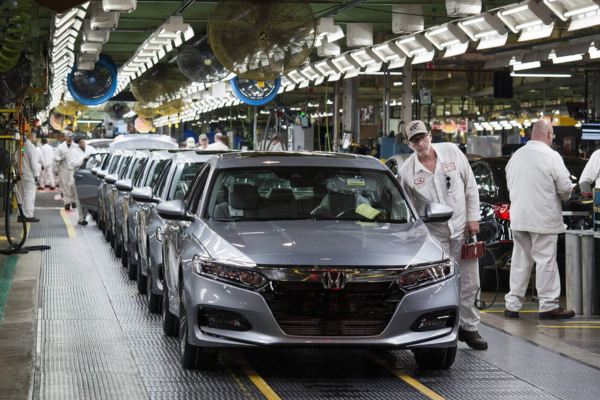
The decision could affect the automaker’s future manufacturing investment, as Honda says its existing North American plants are nearing full production.
Honda Executive Vice President Noriya Kaihara told reporters in Washington that the company needs a new factory and wants it operating around 2030.
But the company’s investment plan depends on the future of the trade deal.
“If there is no USMCA agreement in the future, we may have to change our direction,” Kaihara said.
Honda expects to make a decision within one or two years, he said.
## Honda Faces Tariff and Trade Uncertainty
The comments come as the Trump administration negotiates with Canada and Mexico over the future of the USMCA, the free trade agreement covering the three North American economies.
The United States imposed 50% tariffs on $20 billion of Canadian products on Saturday, according to the information provided. Canada said it would retaliate from September 8.
Kaihara said Honda is not currently passing the cost of tariffs on to North American customers.
The trade uncertainty has already affected investment decisions across the auto industry. Hyundai Motor said last year that uncertainty over USMCA was delaying investment decisions and warned that every month of uncertainty could slow job creation, site selection and technology development.
Honda’s North American investment plans are also changing as the automaker adjusts its product strategy.
The company said in May that it had scrapped its long-term electric vehicle sales target, including its goal for EVs to make up one-fifth of new car sales in 2030.
Honda now plans to launch 15 new hybrid models by 2030. The company also indefinitely suspended an $11 billion Canada project to produce EVs and batteries and cancelled three planned EVs for the U.S. market.
At the same time, demand for Honda’s hybrid and fuel-efficient models has increased as oil prices remained high. Honda reported its best July in seven years, with car sales rising 36%.
Honda also said last year that it would move production of its U.S.-bound five-door Civic hybrid from Japan to Indiana. For Honda, the next major factory decision now sits at the intersection of trade policy, tariffs, supply chains and long-term manufacturing investment.
Read also: Honda ends US sales of its only electric vehicle, leaving American buyers with fewer choices