Pratt & Whitney, a subsidiary of RTX Corporation, sits at the core of global aviation, powering commercial airliners, military fighters and regional aircraft that together move the world every second.
Founded in 1925, the U.S. aerospace manufacturer has grown into the world’s second-largest commercial aircraft engine maker, holding about 35% of the global market, with more than 90,000 engines currently in service.
“Our customers depend on us to get where they’re going and back again,” the company says, a promise that spans commercial travel, national defense and remote regional aviation.
Geared Turbofan engine drives fuel efficiency gains
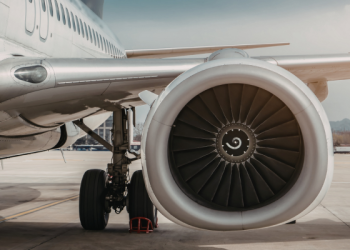
At the heart of Pratt & Whitney’s modern commercial strategy is the Geared Turbofan (GTF) engine, used on Airbus A220, A320neo and Embraer E-Jet E2 aircraft. The GTF design separates the fan and turbine speeds using a gearbox, improving fuel efficiency and reducing noise.
The company reported dispatch reliability as high as 99.8% for GTF engines in earlier service years, though it has also faced challenges. Manufacturing defects and contaminated metal components led to inspections, recalls and temporary aircraft groundings from 2023, affecting airlines across the U.S., Europe and Asia.
Military engines anchor long-term defense revenue
Beyond commercial aviation, Pratt & Whitney plays a critical role in defense. Its F135 engine, which powers the F-35 Lightning II fighter jet, remains one of the most important military propulsion systems in service today. The company also supplies engines for the F-22 Raptor and other major platforms.
In 2022, the firm secured a nearly $4.4 billion U.S. Department of Defense contract to produce jet engines for the Air Force, Navy and Marine Corps, reinforcing its long-term defense position.
MRO and digital services expand earnings stability
Pratt & Whitney supports more than 11,000 customers in 180 countries, backed by a global Aircraft Maintenance, Repair and Overhaul (MRO) network. Its EngineWise® platform combines parts, repairs, training and digital diagnostics to extend time on wing and lower costs.
“Sustainable flight is our main focus,” the company says, as it targets net-zero aviation CO₂ emissions by 2050 through efficiency gains, hybrid-electric development and cleaner fuels.
For Jim Evans, CEO of Africair, the impact is already clear. “The PT6-powered Caravan essentially created the safari industry in East Africa,” he said. “Without that reliability, those markets would not exist at today’s scale.”
Read more on Lamborghini: Combustion engines will live “as long as possible”