The rapid growth of electric vehicles has created huge opportunities for manufacturers worldwide. However, Proterra’s collapse shows that strong demand alone is not enough to guarantee success. The company’s downfall serves as a warning for investors, governments and automakers racing to electrify transport.
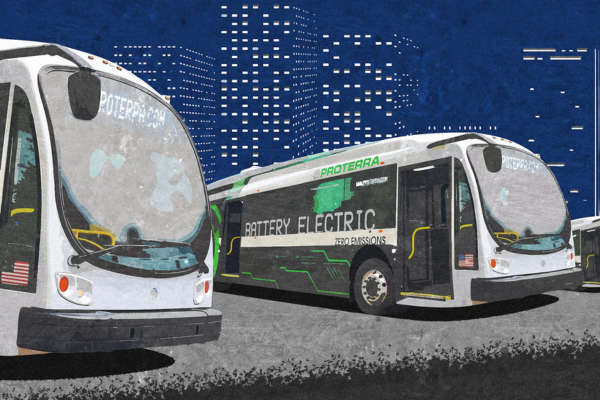
Proterra was once regarded as one of America’s brightest clean-energy success stories. Founded in 2004, the California-based company specialised in manufacturing electric buses, battery systems and charging infrastructure. Its products were adopted by transit agencies across the United States, while its battery technology supplied commercial vehicle manufacturers.
The company attracted support from major investors and government programmes aimed at reducing carbon emissions. It became one of the leading names in America’s transition to zero-emission public transport.
By 2021, Proterra had gone public through a Special Purpose Acquisition Company (SPAC) merger, reaching a market valuation of nearly US$1.6 billion. Expectations were high as governments announced ambitious plans to replace diesel buses with electric alternatives.
But behind the optimism, financial pressures were mounting.
Scaling production proved far more expensive than anticipated. Manufacturing electric buses requires significant investment in factories, batteries, skilled labour and supply chains. Rising inflation, higher interest rates and persistent supply chain disruptions after the COVID-19 pandemic pushed production costs even higher.
The company also struggled to manufacture buses efficiently while meeting delivery deadlines. Delays increased costs, weakened customer confidence and squeezed already thin profit margins.
Although demand for electric buses remained strong, Proterra found it difficult to convert sales into sustainable profits. The business continued to burn cash while expanding operations.
In August 2023, the company filed for Chapter 11 bankruptcy protection in the United States. The filing allowed Proterra to restructure its business while seeking buyers for its different divisions.
At the time of the bankruptcy filing, Proterra reported assets of between US$500 million and US$1 billion, alongside liabilities estimated within the same range. The bankruptcy reflected not a lack of market demand, but the challenge of building a profitable manufacturing business in one of the world’s most capital-intensive industries.
Several parts of the business later found new owners. Swedish commercial vehicle manufacturer Volvo Group acquired Proterra’s battery business for approximately US$210 million, while electric bus manufacturer Phoenix Motor purchased its transit bus operations for about US$10 million.
The Proterra story offers valuable lessons for the global automotive industry.
First, rapid market growth does not guarantee business success. Companies must carefully balance expansion with financial discipline and operational efficiency.
Second, manufacturing electric vehicles at scale remains one of the industry’s biggest challenges. High capital requirements, complex supply chains and volatile raw material prices continue to test even experienced manufacturers.
Finally, investors are increasingly looking beyond ambitious promises. Profitability, reliable production and long-term sustainability now matter more than growth projections alone.
As countries across Africa, Europe and North America accelerate the shift towards cleaner mobility, Proterra’s rise and fall highlights an important reality. Innovation may open the door, but only strong execution and sound financial management can keep it open.
Read also: What went wrong at Arrival? How the $15bn EV startup ended up in administration


![Trump Targets Bombardier [Narcity]](https://autojournal.africa/wp-content/uploads/2026/09/Trump-Targets-Bombardier-350x250.png)